Introduction: Why Your Hotel Duvet Insert Matters More Than You Think
In the hospitality industry, a guest’s stay is defined by the quality of their sleep. While a high-quality mattress provides the foundation, the duvet insert is what delivers that cloud-like hotel experience guests crave.
A poorly chosen hotel duvet insert has direct consequences on guest experience: too hot in summer, insufficient in winter, losing volume after the first washes, or making noise when the guest moves—these are problems that appear in reviews and have a straightforward solution with an informed purchase. Duvet inserts are, quite literally, your guests’ “sleep companions” that directly impact comfort, satisfaction, and ultimately, your hotel’s online reputation.
Selecting the right duvet is a delicate balance between guest satisfaction, operational durability, and budget efficiency. This Ulen guide walks you through everything you need to know—from fill types and tog ratings to shell fabrics and allergy considerations—so you can make a confident procurement decision.
Fill Types: Down vs. Synthetic – Which Is Right for Your Hotel?
The duvet filling determines its thermal behaviour, weight, durability in the laundry, and cost. Most hotels standardize around one of two insert categories:
Down and Down Blend Duvet Inserts
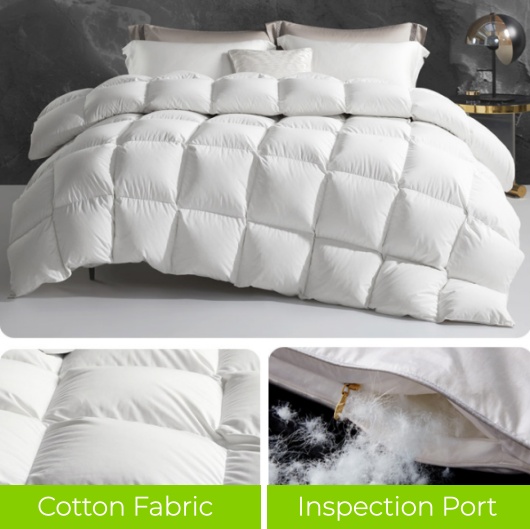
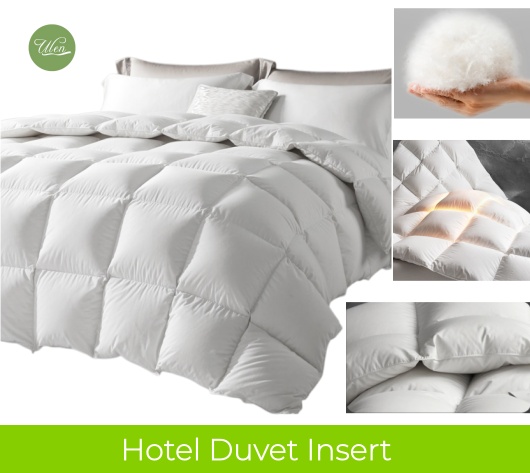
Natural down—duck or goose—offers the most luxurious bed experience: light, fluffy, with a thermal regulation capacity superior to any synthetic fibre and that enveloping sensation many luxury guests directly associate with “the great hotel bed”.
Key advantages:
-
Superior warmth-to-weight ratio: Down can provide warmth with less fill weight, which often improves comfort and reduces that heavy, trapped feeling some sleepers dislike.
-
Exceptional breathability: Allows moisture to escape so guests don’t overheat.
-
Longevity: Premium goose down can last 5–7 years with proper maintenance and professional laundering.
What to look for:
-
Down percentage: The ratio of down to feather. Higher down content typically feels loftier and lighter.
-
Fill power (FP): A loft metric that correlates with how fluffy and resilient the insert feels. Look for high fill power (600+) for luxury properties. Goose down is softer and lighter than duck down and has greater fill power—meaning more warmth with less weight.
-
Ethical sourcing: Some buyers look for certifications such as the Responsible Down Standard (RDS).
Considerations:
Down requires specific wash programmes, careful drying with tumble dryer balls to prevent clumping, and greater delicacy throughout the process. It’s perfectly manageable for hotels with in-house laundry and trained staff. However, down and feathers can trigger allergies in some guests.
Best for: 5-star hotels, luxury boutique establishments, and properties where guest experience is paramount.
Down Alternative (Synthetic) Duvet Inserts
Down alternative inserts—usually polyester or microfiber—are designed to mimic the feel of natural down without using animal products. They offer consistent performance, easier care, and simpler messaging around sensitivities.
Key advantages:
-
Hypoallergenic: Ideal for guests with allergies.
-
Easy maintenance: Withstands frequent wash cycles at medium to high temperatures without losing volume significantly, and dries quickly.
-
Cost-effective: More affordable than natural down.
-
Consistent performance: Synthetic fills maintain their shape and loft through repeated commercial laundering.
Popular synthetic options:
-
Siliconised hollow fiber: The most widely used standard in hospitality—offers the best balance between comfort, durability in industrial laundering, ease of maintenance, and cost. Recommended for 2-, 3-, and 4-star hotels.
-
Premium microfiber: An evolution of conventional hollow fiber with a softer feel and greater heat retention. The usual option in 4-star hotels that want something more than standard fiber without going as far as down.
Best for: Large chains, high-turnover properties, mid-range hotels, and properties where operational efficiency and hypoallergenic requirements are priorities.
Quick Comparison: Down vs. Synthetic
| Factor | Down | Synthetic (Down Alternative) |
|---|---|---|
| Warmth-to-weight | Superior | Good |
| Breathability | Excellent | Moderate |
| Longevity | 5–7 years | 2–3 years |
| Maintenance | Specialised care | Easy, machine washable |
| Hypoallergenic | May trigger allergies | Yes |
| Cost | Higher | More affordable |
| Best for | Luxury properties | Mid-range to high-turnover hotels |
Understanding Tog Ratings: Matching Warmth to Climate and Season
The tog rating of a hotel duvet determines its heat retention and is the most important variable for matching the product to the climate of the destination and the characteristics of the hotel’s rooms. A duvet that is too warm in summer generates complaints about heat; one that is too light in winter generates complaints about cold.
What Is Tog?
Thermal Overall Grade (Tog) is the unit used to measure the warmth and temperature insulation of bedding. Higher tog indicates warmer bedding, while a lower tog indicates cooler bedding.
Tog Ratings by Season
| Season | Tog Rating | Best For |
|---|---|---|
| Summer | 4.5 or lower | Warm climates, hot sleepers, light and breathable insulation |
| Spring/Autumn | 7–10.5 | Moderate temperatures, balanced warmth and breathability |
| Winter | 10.5–13.5 | Cold climates, maximum insulation |
| All-Season | 9–10.5 | Climate-controlled hotel rooms, year-round versatility |
Practical Recommendations for Hotels
-
A 4.5 Tog is ideal for summer or tropical climates.
-
A 10.5 Tog is the standard for all-season use in climate-controlled hotel rooms. It offers versatile comfort, providing warmth in cooler conditions and remaining comfortable as room temperatures rise.
-
For extreme winters, consider 12–15 tog for maximum insulation.
The All-Season Duvet System
Many hotel groups use an all-season duvet system—two lighter duvets that can be used separately or buttoned together. For example, a 4.5 tog and a 9.0 tog duvet can be clipped together to create a 13.5 tog shield for the coldest weeks. This approach provides maximum flexibility across seasons while simplifying inventory management.
Alternative Warmth Measurement: GSM
Beyond tog ratings, warmth can also be measured by GSM (grams per square meter)—the weight of the filling. A 200–250g/㎡ filling is perfect for year-round comfort, whereas 400g/㎡ and above is reserved for winter or colder regions.
Shell Fabric: The Unsung Hero of Duvet Performance
The duvet shell must be down-proof to prevent filling leakage and maintain hygiene. But shell fabric affects more than just containment—it influences breathability, noise, and overall guest comfort.
Thread Count and Fabric Quality
-
Thread Count (TC): For hotels, a 230T weave is the industry standard. It is dense enough to be down-proof but remains breathable for the guest.
-
Yarn Quality: Professional-grade shells should use 40×40 combed cotton. The combing process removes short fibers, resulting in a stronger, smoother yarn that withstands the rigors of industrial laundering.
Fabric Choices
-
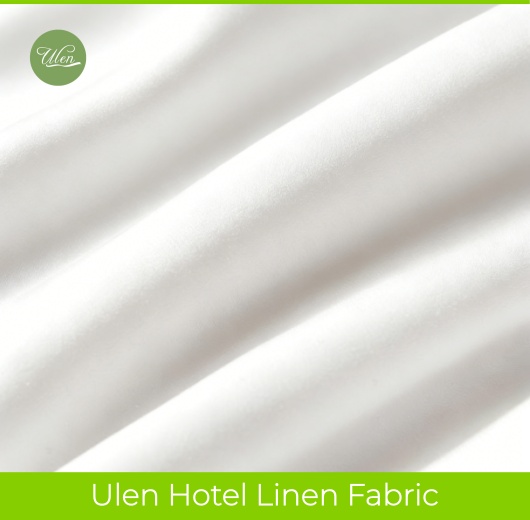
Cotton: Breathable, comfortable, and the most common choice for hotel duvet shells. Cotton percale offers a crisp, breathable surface, while cotton sateen feels smoother and can read slightly warmer.
-
Polyester blends: More durable and cost-effective, though potentially less breathable than cotton.
-
Bamboo or lyocell: Eco-friendly options gaining ground for their sustainability profile and good breathability.
What to Avoid
Hotels often avoid shells that feel noisy, trap heat, or allow shifting and bunching during bed turns. A noisy, crinkly shell can disturb light sleepers and generate negative reviews.
Allergies: Catering to Sensitive Guests
With an increasing number of guests suffering from allergies, offering hypoallergenic options is no longer optional—it’s an expectation.
Hypoallergenic Options
-
Down alternative duvets: Synthetic fills are naturally hypoallergenic and free from common allergens. They’re ideal for allergy-sensitive sleepers.
-
Treated down: Some down inserts can be processed and treated to reduce allergen potential.
-
Certifications: Look for OEKO-TEX certified products, which are free from harmful substances.
Best Practice for Hotels
Consider stocking a percentage of your room inventory with hypoallergenic duvet inserts. This allows you to accommodate guest requests promptly and demonstrates attention to guest well-being. Many hotels also include allergy-friendly bedding options in their guest preference profiles.
Construction: Engineering for Longevity
Beyond fill type and shell fabric, the construction method determines how well a duvet maintains its shape and warmth over time.
Box Stitch / Baffle-Box Construction
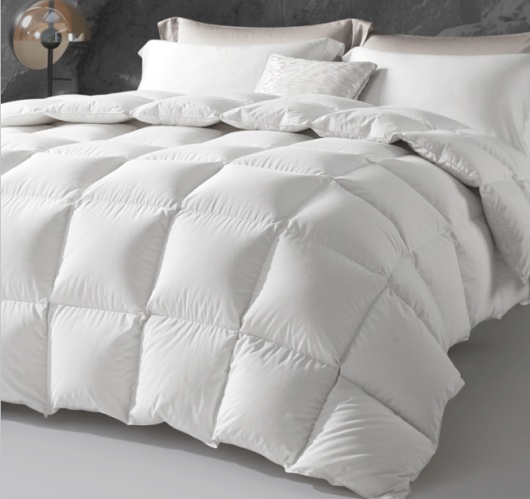
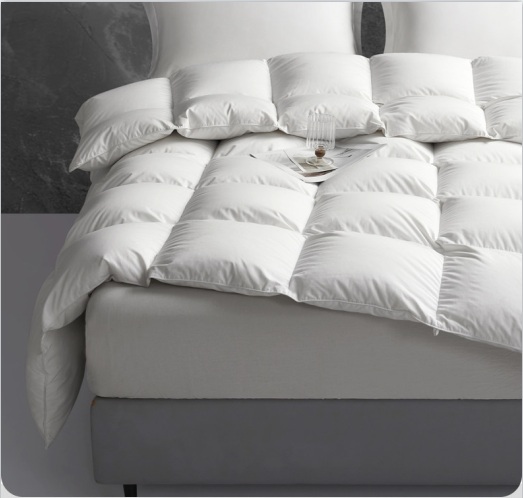
This method creates individual boxes that trap the filling in place, preventing it from clumping at one end of the duvet. Baffle-box construction—where fabric walls separate each box—allows the fill to reach maximum loft while staying evenly distributed.
Double-Needle Edging
Look for reinforced edges with double-needle stitching or piping. This prevents fraying and ensures the duvet maintains its structural integrity over hundreds of wash cycles.
Corner Tabs
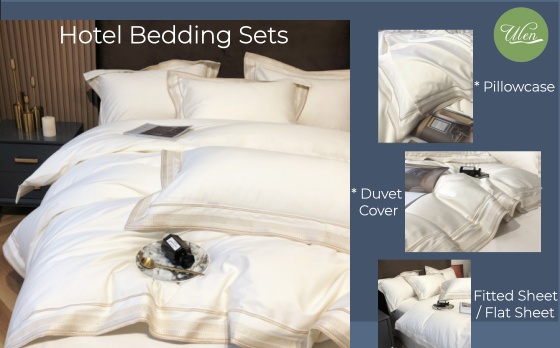
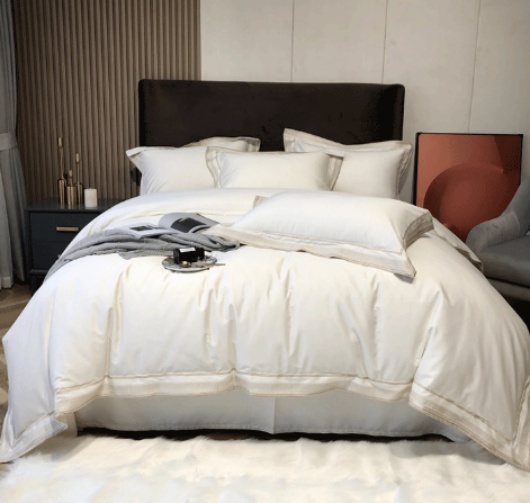
Corner tabs (or loops) allow the duvet insert to be tied securely to the duvet cover, preventing shifting and bunching—a common guest complaint.
Maintenance and Lifespan: Planning for the Long Term
Hotel duvets face much higher turnover than residential ones. Understanding maintenance requirements and expected lifespan helps with budgeting and replacement planning.
Daily Care
Housekeeping should fluff duvets daily to restore loft and air out the filling.
Expected Lifespan
-
High-quality synthetic duvet: 2–3 years in a busy hotel.
-
Premium goose down: 5–7 years with proper maintenance and professional laundering.
Laundry Considerations
-
Down requires specific wash programmes and careful drying.
-
Synthetic fills withstand frequent wash cycles at medium to high temperatures and dry quickly.
-
Hotels often choose a bed-making system (duvet cover setup or triple sheeting) that affects both comfort and operations. Triple sheeting can reduce how often inserts require a full wash cycle.
Sizing: Getting the Fit Right
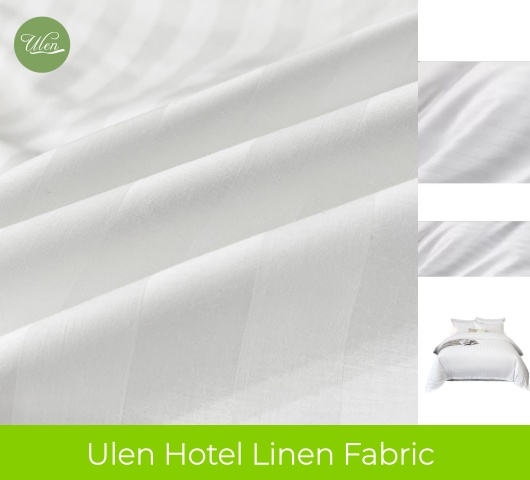
Hotel duvets are typically sized larger than the mattress to ensure full drape on both sides. Confirm sizing with your housekeeping team before ordering. Common sizes include Double (80”×90”), Queen (90”×90”), and King (104”×90”).
Conclusion: Matching Duvet Inserts to Your Hotel’s Unique Profile
Choosing the right duvet insert for your hotel isn’t about finding a one-size-fits-all solution—it’s about matching the product to your specific property, guest profile, and brand promise.
Ask yourself these questions:
-
What is your hotel’s star rating and positioning?
Luxury properties should invest in high-fill-power goose down; mid-range hotels may find siliconised hollow fibre or premium microfiber more appropriate.
-
Where is your hotel located?
Tropical or warm climates call for lower tog ratings (4.5 or below); cold climates require higher tog ratings (10.5–13.5).
-
Who are your guests?
Business travellers, families, and luxury guests may have different expectations. Consider stocking hypoallergenic options for sensitive guests.
-
What are your operational capabilities?
If you have in-house laundry with trained staff, down is manageable. If you prioritise ease of maintenance, synthetic is the way to go.
-
What is your budget?
While down offers superior comfort and longevity, synthetic fills provide excellent value for money with easier care.
Remember: the right duvet insert doesn’t just keep guests comfortable—it drives positive reviews, encourages repeat stays, and reinforces your brand’s commitment to quality. Make your choice wisely, and your guests will thank you with their loyalty.