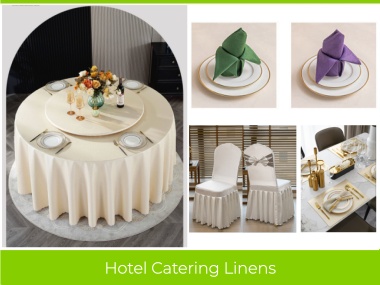
Every exceptional dining experience begins with a flawless foundation. Before the first course arrives, before the wine is poured, before the server introduces the specials — guests are already forming impressions based on what they see and touch at the table.
Table linens are the largest textile surface visible in a dining setting. They set the visual quality benchmark for the entire experience before food arrives. A crisp, well-pressed tablecloth signals attention to detail and care. A wrinkled, stained, or ill-fitting cloth signals the opposite — and once that impression is formed, it‘s difficult to reverse.
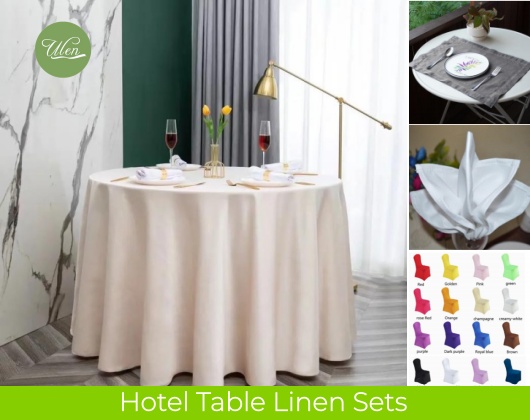
Research has shown that table linen contributes to a significantly higher preference for appetisers and meal quality in general, as well as better perceptions of service, ambiance, and overall experience. In other words, the fabric beneath the plates directly influences how guests perceive the food on top of them.
For hoteliers and restaurant operators, table linens are not merely operational supplies — they are a strategic tool for brand differentiation, guest satisfaction, and revenue growth. This Ulen guide covers everything procurement professionals need to know about selecting, maintaining, and maximising the value of table linens.
Why Table Linens Matter: The Psychology of the Dining Table
The dining table is a stage, and table linens are the set design. They communicate your establishment‘s identity before a single word is spoken.
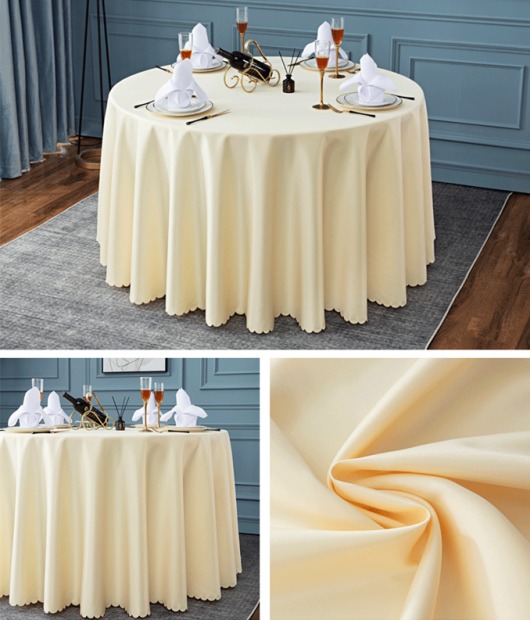
Aesthetics and Atmosphere: The color, texture, and pattern of table linens should complement the overall design of your venue. Crisp white linens convey elegance and formality. Textured fabrics in neutral tones create a relaxed-yet-refined ambiance. Bold colors and patterns can evoke specific moods — sky blue, for example, evokes feelings of trust, calm, and openness.
Perceived Quality: A study in star-rated hotels found a significant association between linen quality and guest satisfaction, with linen quality explaining approximately 19.2% of the variations in guest satisfaction. Guests equate well-maintained, high-quality linens with overall establishment quality.
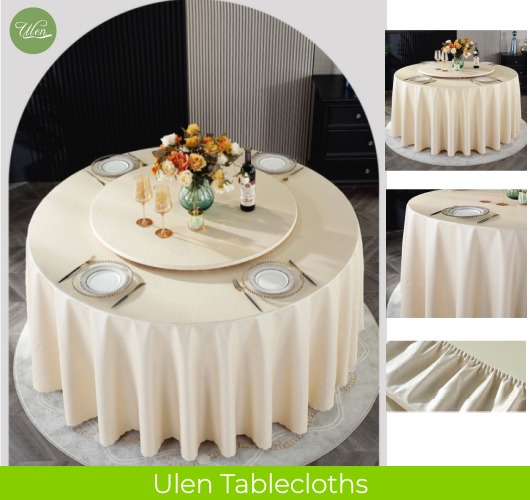
Brand Identity: Custom table linens — whether through embroidery, color matching, or distinctive weaves — reinforce brand recognition. Embroidered logos, monograms, or custom patterns make your brand visible to guests and ensure recognition value.
The Tactile Experience: Texture is the secret ingredient. A flat, lifeless tablecloth looks cheap. Fabrics with depth — jacquard weaves, damask patterns, or textured finishes — catch the light and feel luxurious to the touch before the food even arrives.
Fabric Types: Choosing the Right Material for Your Operation
Table linen fabrics fall into three primary categories: damask (self-pattern woven, tone-on-tone, formal fine-dining), jacquard (contrast-pattern woven, mid-formal restaurant and event), and poly-cotton (65/35 or 50/50, industrial laundry durability, high-volume banqueting).
Cotton
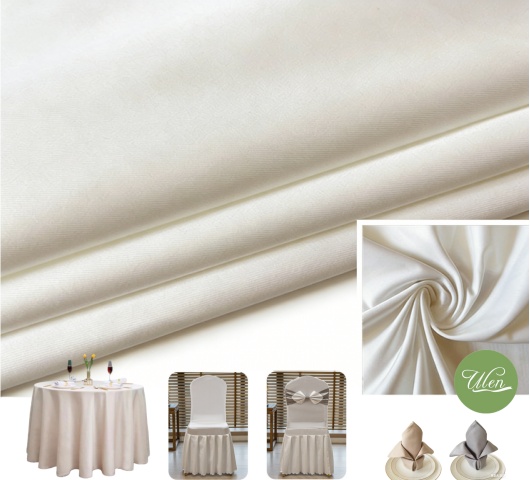
One of the most popular types of table linen, cotton is natural and breathable. Most cotton tablecloths are machine washable, making stock rotation smooth in busy restaurants. Cotton is also extremely durable, offering true value for money with a long lifespan.
Pros:
-
Natural, breathable fibre
-
Soft and comfortable to the touch
-
Durable with proper care
-
No static build-up, making it easy to separate from piles
Cons:
-
Requires ironing after laundering
-
Limited color and pattern options compared to synthetics
-
Can shrink if not properly cared for
-
May stain more readily than synthetic blends
Best for: Fine dining establishments, boutique hotels, and venues where presentation is paramount.
Polyester
A synthetic material, polyester table linen has strong and hard-wearing attributes while retaining the look and feel of cotton. It is available in a wide range of colors and styles.
Pros:
-
Highly durable and resistant to wrinkles
-
Quick-drying and crease-resistant
-
Does not shrink in long dryer cycles
-
Wide range of colors and patterns
-
Generally more affordable than cotton
Cons:
-
Less breathable than natural fibres
-
Some guests may be sensitive to polyester due to production chemicals
-
Lower perceived premium quality compared to cotton or linen
Best for: High-volume banqueting, casual dining, and operations where laundry turnaround speed is critical.
Poly-Cotton Blends
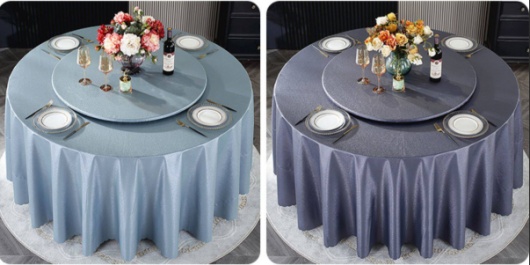
The most common material used in the food and hospitality industries is a fabric spun from polyester and cotton in a 65/35% ratio. This blend combines the best qualities of both fibres.
Pros:
-
Resists wrinkles, dries faster than cotton, shrinks minimally, and holds colour through repeated commercial laundering
-
Polyester fibres do not absorb stains as readily as cotton — oil and sauce stains are easier to release in commercial laundering
-
Excellent durability for high-volume hospitality
Cons:
-
Does not deliver the drape quality of damask or linen
-
Less premium feel than 100% cotton
Best for: Mid-market restaurant chains, hotel banqueting where 100+ commercial wash cycles are required, and bistro/casual dining.
Damask
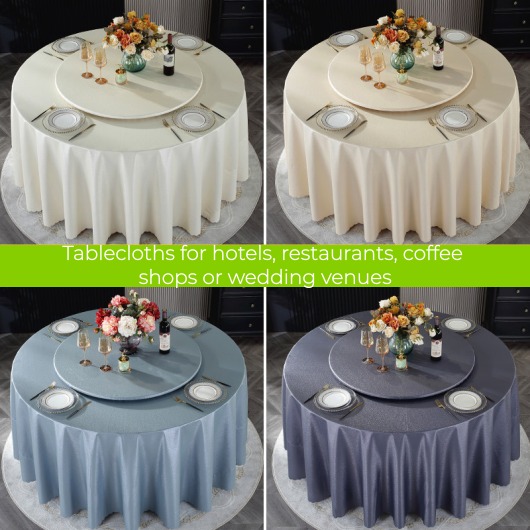
Damask is a weaving technique applicable to both cotton and linen which decorates the cloth with ornamental patterns and figures. The pattern is woven into the fabric itself, creating a tone-on-tone design visible as a sheen differential.
Pros:
-
Premium, formal aesthetic
-
Beautiful drape
-
Reversible and durable due to tight weave structure
-
Patterns are woven in, not printed — they won‘t fade or wash out
Cons:
-
Requires ironing after laundering
-
Higher cost than poly-cotton blends
-
More delicate care requirements
Best for: 4-star and above hotel restaurants, fine dining establishments, formal event catering and banqueting.
Jacquard
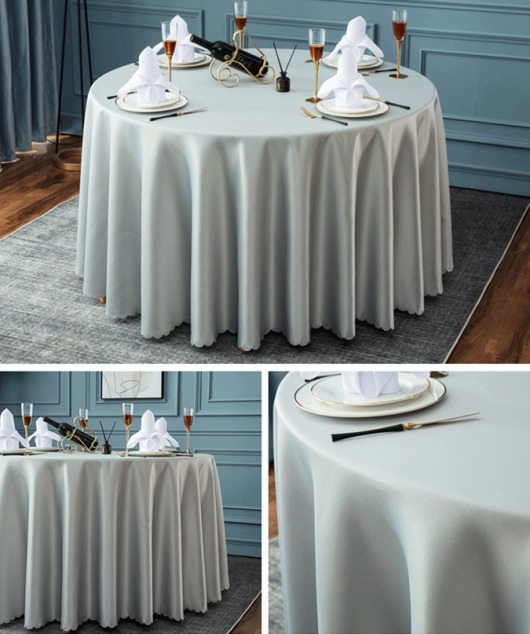
Jacquard tablecloths have designs woven directly into the fabric using various color threads. Unlike damask‘s tone-on-tone pattern, jacquard can incorporate contrasting colors.
Pros:
-
Intricate, textured patterns that catch the light
-
Adds visual depth and interest to table settings
-
Durable woven construction
Cons:
-
Can be more expensive than printed or plain fabrics
-
May require specific care instructions
Best for: Mid-formal restaurants, events, and venues seeking distinctive visual impact.
Sizing: Getting the Fit Right
Proper sizing is essential for a professional presentation. A tablecloth that is too small looks inadequate; one that is too large appears sloppy and can be a tripping hazard.
How to Measure
Before ordering, measure both the length and width of the table surface. The overhang — the amount of fabric that hangs over the edge — needs to be accounted for.
Standard overhang guidelines:
-
Lap overhang: Approximately 30cm on all four sides. Sit at the table and measure the distance between your legs and the table surface — this gives you the ideal overhang.
-
Floor-length drop: For formal banquets, allow the tablecloth to fall to the ground. Standard table height is approximately 75cm.
Example calculation:
-
Table length: 120cm
-
Desired overhang: 30cm per side
-
Tablecloth length needed: 120 + 30 + 30 = 180cm
Common Tablecloth Sizes
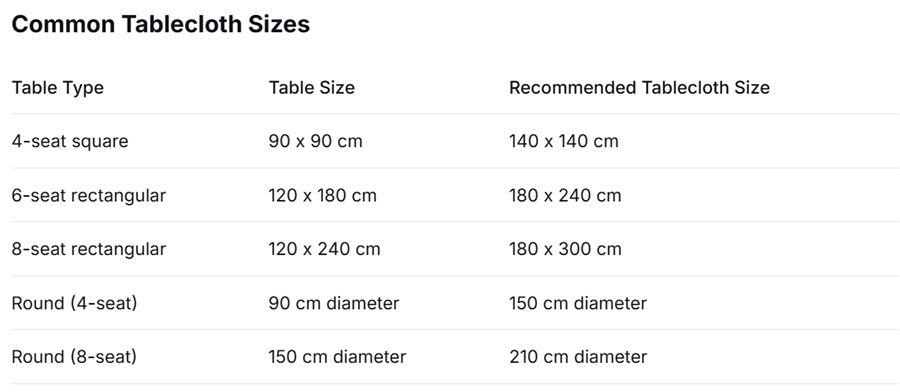
Important: It is critical to get these measurements correct before ordering to avoid having to return tablecloths.
Custom Sizing
For banquet halls with non-standard table configurations, custom sizing is available from professional suppliers. Extra-wide widths can create a completely seamless drop for oversized round banquet tables or long buffet setups. Most custom linen suppliers offer MOQs starting at 100PCS, making custom sizing accessible for properties of all sizes.
Color and Design: Beyond Basic White
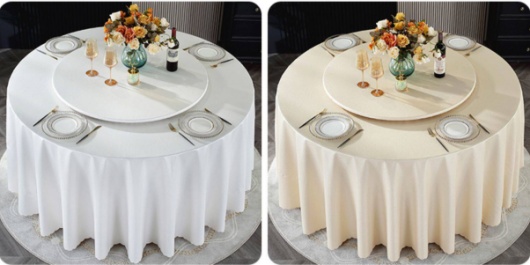
White table linens are safe, but they are also common. To create a truly memorable guest experience, color and design matter.
The Case for Color
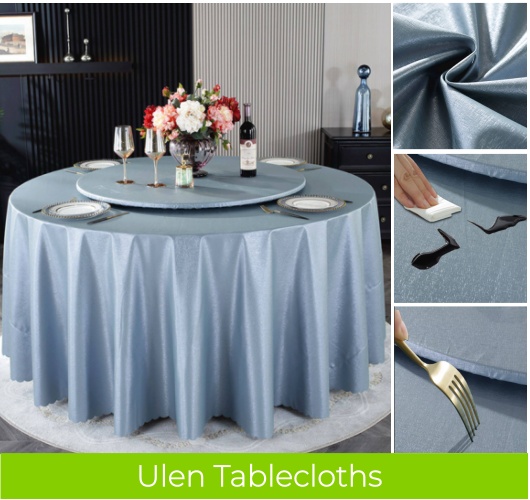
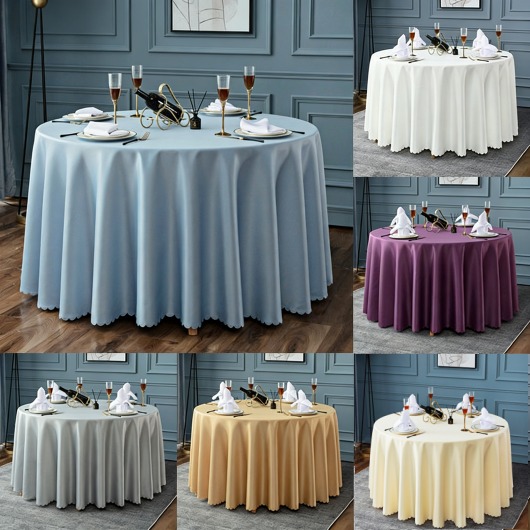
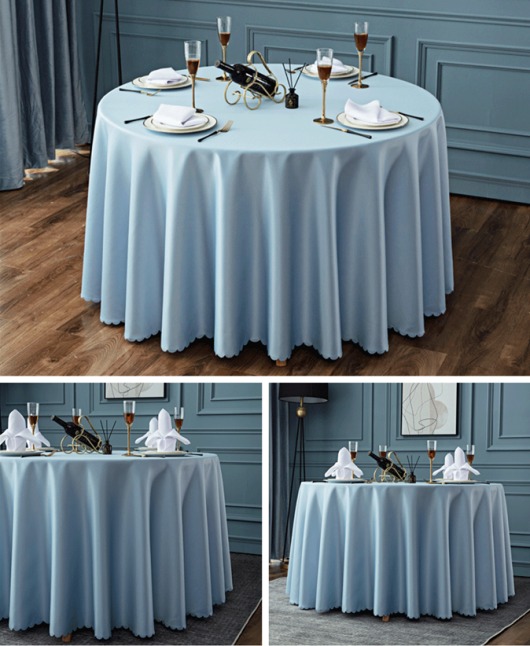
A Romantic Blue Table Setting evokes feelings of trust, calm, and openness. Different colors communicate different messages:
-
White: Elegance, formality, cleanliness
-
Ivory/Cream: Warmth, sophistication
-
Navy/Charcoal: Modernity, seriousness
-
Sky Blue: Calm, openness, coastal vibe
-
Burgundy/Maroon: Richness, tradition, warmth
Texture and Pattern
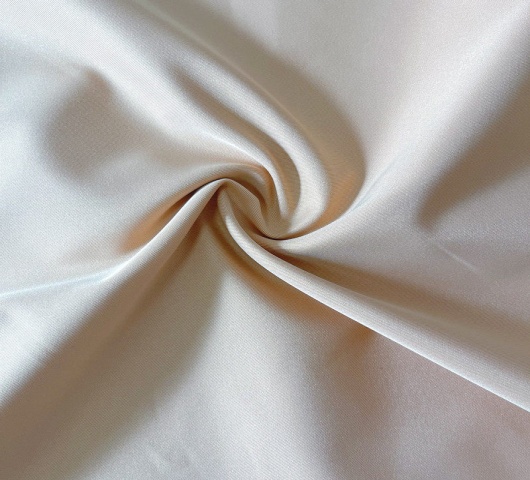
Texture adds depth and visual interest. A waffle weave, a damask pattern, or a jacquard design introduces a physical landscape to the table. These textures catch the ambient lighting of a dining room and make the table feel luxurious to the touch.
Practical Considerations
While aesthetics matter, practicality cannot be ignored. Detailed patterns can help hide minor spills during service, keeping the table looking pristine from appetizer to dessert. For high-turnover operations, consider whether a patterned fabric might be more forgiving than a solid white.
Colorfastness
Ensure that dyed linens are colorfast — they should not bleed or fade after repeated commercial laundering. Professional suppliers use color-safe detergents for colored fabrics and maintain strict quality controls to ensure color retention.
Customization: Making Your Brand Visible
Custom table linens are an extension of your brand identity. Embroidered logos, custom patterns, and tailored sizing all reinforce your establishment’s unique positioning.
Embroidery and Branding
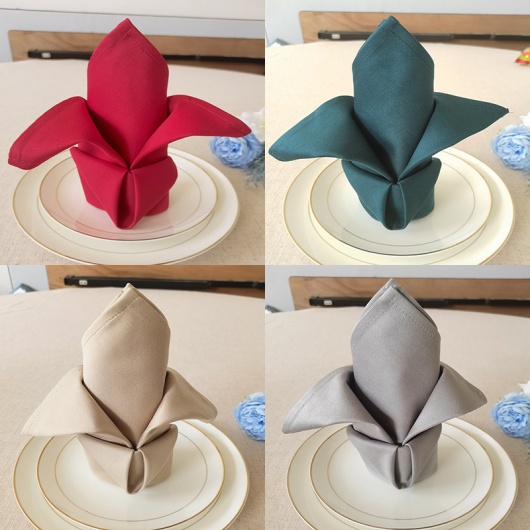
Embroidered tablecloths, napkins, or towels make your brand visible to guests and ensure recognition value. Custom embroidery can feature:
-
Your hotel or restaurant logo
-
A signature monogram
-
Custom patterns or motifs
-
Brand name or tagline
-
Cotton damask drapes beautifully but requires ironing after laundering
-
Poly-cotton and polyester damask reduce the ironing burden significantly — critical for high-volume hospitality where laundry turnaround speed matters
-
Industrial flatwork ironers (calenders) can achieve an instantly crisp, wrinkle-free presentation
Stain Removal
Commercial-grade tablecloths are often enhanced with institutional soil-release technology, allowing tough food stains, oils, and wine to wash out effortlessly. For stubborn stains:
-
Treat promptly before washing
-
Use appropriate stain removers for the specific fabric type
-
Avoid rubbing — blot stains gently
Storage
-
Store folded on clean linen racks in a ventilated room
-
Sturdy plain weave resists crease setting, making it ready for rapid deployment
-
Keep away from humid environments to prevent mildew
Sustainability: Meeting Guest Expectations
Environmental sustainability has become one of the defining trends shaping the global hotel linen market. Modern travelers increasingly expect hotels and restaurants to demonstrate environmental responsibility.
Eco-Friendly Options
Organic Cotton: High quality, soft, pesticide-free, and biodegradable. GOTS-certified organic cotton is available from certified suppliers.
Recycled Materials: Manufacturers are now using recycled marine plastic to produce high-performance polyester fabrics that conserve resources, reduce CO₂ emissions, and are easy to clean and recycle. Some table linens are now made with 40% recycled materials while remaining virtually indistinguishable from traditional linens.
Recycled PET-Infused Fabrics: Recycled PET-infused fabrics, OEKO-TEX-certified materials, and naturally dyed textiles are seeing increased demand from environmentally conscious consumers.
Certifications to Look For
-
OEKO-TEX Standard 100: Ensures textiles are free from harmful substances
-
GOTS (Global Organic Textile Standard): Organic certification
-
GRS (Global Recycled Standard): Recycled content verification
-
ISO 9001: Quality management systems
The Business Case for Sustainability
Sustainable table linens are not just good for the planet — they are good for business. Eco-conscious guests are willing to pay a premium for establishments that demonstrate environmental stewardship. Additionally, many sustainable materials offer superior durability, reducing replacement frequency and long-term costs.
Procurement Tips for Hotel and Restaurant Buyers
1. Assess Your Operational Needs
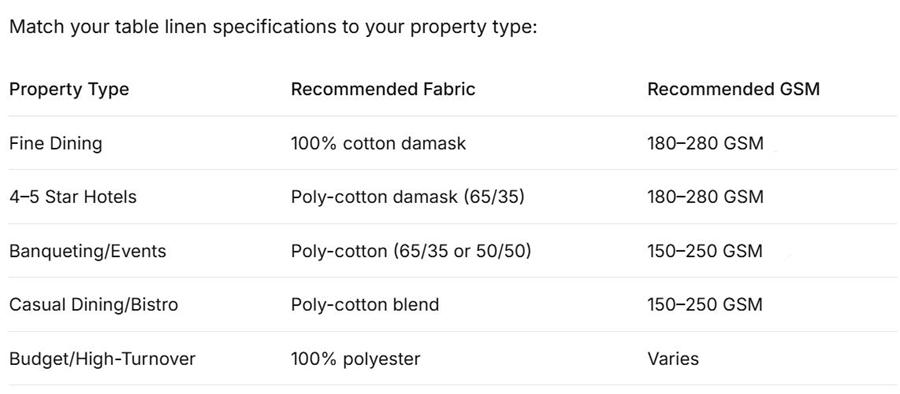
Match your table linen specifications to your property type:
2. Consider Total Cost of Ownership
A high-grade 100% polyester tablecloth can withstand 300 industrial wash cycles, while standard cotton blends often fail after just 50. When evaluating suppliers, calculate cost per use rather than just upfront price.
3. Request Samples
Always request samples before placing a bulk order. Test for:
-
Fabric quality and feel
-
Color accuracy
-
Shrinkage (should be ≤5%)
-
Colorfastness
-
Stain resistance
4. Verify Supplier Credentials
Look for suppliers who can demonstrate:
-
ISO 9001 certification
-
OEKO-TEX certification
-
Track record with hotels and restaurants similar to your establishment
-
Transparent lead times and MOQs
5. Plan for Replacement Cycles
Establish a systematic replacement schedule:
-
High-turnover operations: Replace every 6–12 months
-
Mid-range properties: Replace every 12–18 months
-
Luxury properties: Replace every 18–24 months
6. Consider a One-Stop Supplier
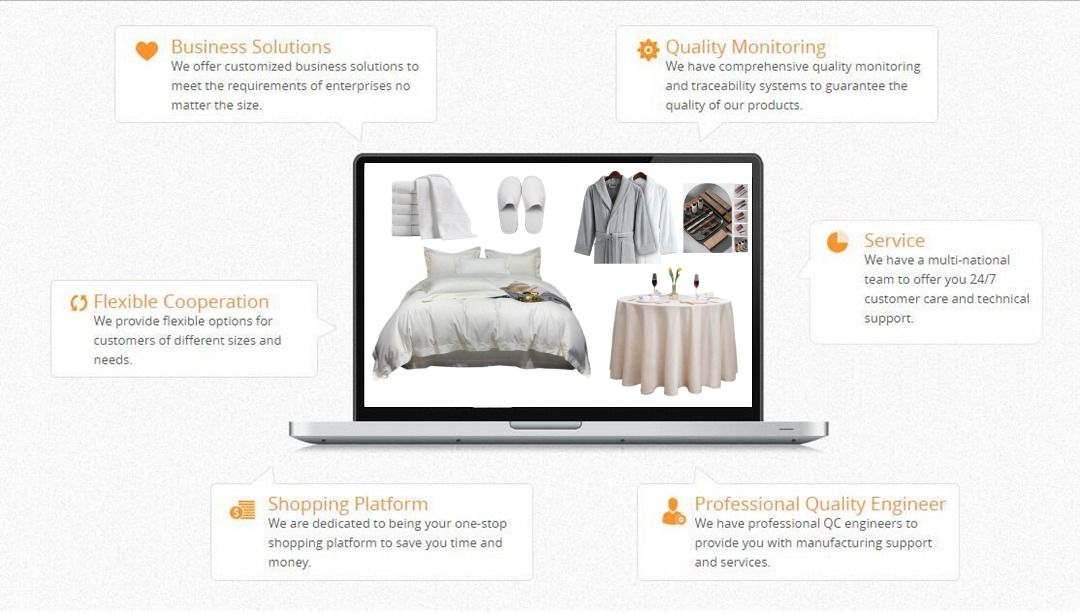
A one-stop supplier simplifies procurement, ensures consistent quality across all linen categories, and streamlines communication. Ulen, for example, serves more than 3,000 star-rated hotels across 100 countries.
Conclusion: Table Linens as a Strategic Investment
Table linens are far more than table coverings. They are the foundation of the dining experience — the canvas upon which every meal is presented, the first tactile impression guests receive, and a silent ambassador of your brand.
The business case for quality table linens:
-
Higher guest satisfaction — linens significantly influence perceptions of food quality, service, and overall experience
-
Stronger brand identity — custom linens reinforce recognition and differentiation
-
Better online reviews — guests notice and comment on table presentation
-
Operational efficiency — the right fabric choice reduces laundry time and costs
-
Sustainability credentials — eco-friendly options meet guest expectations
Whether you are outfitting a fine-dining restaurant, a hotel banquet hall, or a casual bistro, the right table linens elevate every aspect of the dining experience. Invest wisely, maintain carefully, and watch your guests — and your reputation — flourish.
Ulen Linen specializes in premium table linens for hotels, restaurants, and events worldwide. With OEKO-TEX and ISO certifications, custom embroidery capabilities, and over 15 years of experience serving 3,000+ hotels across 100 countries, Ulen delivers the quality that keeps guests coming back. Contact us today to request samples and discover the Ulen difference.