
Introduction: Why Bedding Defines the Guest Experience
The bed is the centerpiece of every hotel room. Guests may forget the view, overlook the minibar — but they will always remember how well they slept. Bedding quality directly influences online reviews, repeat bookings, and brand perception at every property tier.
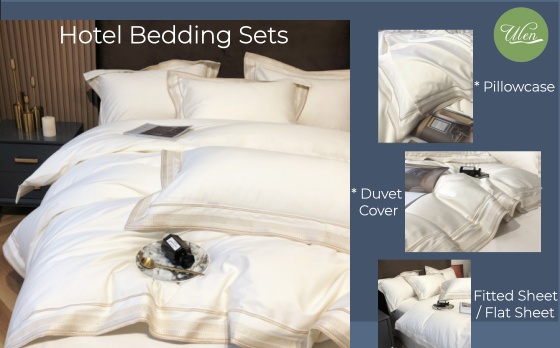
Yet bedding procurement is one of the most technically complex categories in hotel purchasing. Fill power, tog ratings, GSM, fiber blends, allergen standards, and laundering compatibility all need to align — not just with your brand positioning, but with your housekeeping workflow, laundry infrastructure, and local climate.
This Ulen guide breaks down everything you need to know about sourcing sheets, duvets, and pillows — with the technical detail needed to evaluate suppliers, compare products, and make confident purchasing decisions.
Part 1: Hotel Sheets — The Foundation of Comfort
Sheets are the first thing guests touch when they slip into bed. The right sheets feel crisp, clean, and breathable — the wrong ones feel rough, clammy, or wear out after a few washes.
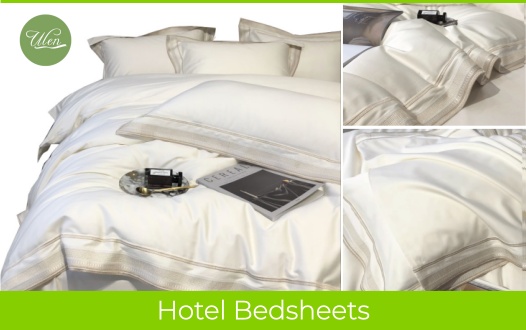
Thread Count: Finding the Sweet Spot
Thread count refers to the number of threads woven into one square inch of fabric — both horizontal (weft) and vertical (warp). People often assume that higher thread count always means higher quality, but that’s only partially true.
Hotels typically choose sheets with a thread count between 200 and 400. This range offers the ideal balance between comfort, durability, and cost — perfect for hospitality environments where sheets must feel luxurious but also withstand regular commercial laundering.
| Thread Count | Hotel Use Case | Feel | Best For |
|---|---|---|---|
| 200–250 | Budget to mid-range hotels | Crisp, cool | Warm climates, minimal ironing |
| 300–400 | 3–5 star hotels | Soft, breathable, durable | Everyday luxury, high turnover |
| 500+ | Boutique or luxury suites | Heavier, smoother | Guest suites, colder climates |
Thread counts over 600 are often achieved through multi-ply yarns, which don‘t necessarily increase quality and may actually reduce breathability. Many of the world’s leading hotel chains use 200-thread count 100% cotton percale because it delivers a cool, crisp feel that‘s both luxurious and practical.
Weave Types: Percale vs. Sateen
The weave determines how sheets feel against the skin:
-
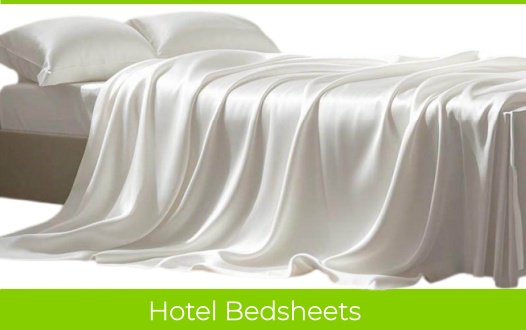
Percale: A matte finish with a crisp, cool feel. Highly durable and ideal for warm sleepers. Percale is the most common choice in hospitality because it withstands heavy laundering and maintains a fresh, crisp texture.
-
Sateen: A smooth, silky finish with a slight sheen. More luxurious feel, often chosen for boutique properties and premium suites.
Fabric Quality
Beyond thread count, consider:
-
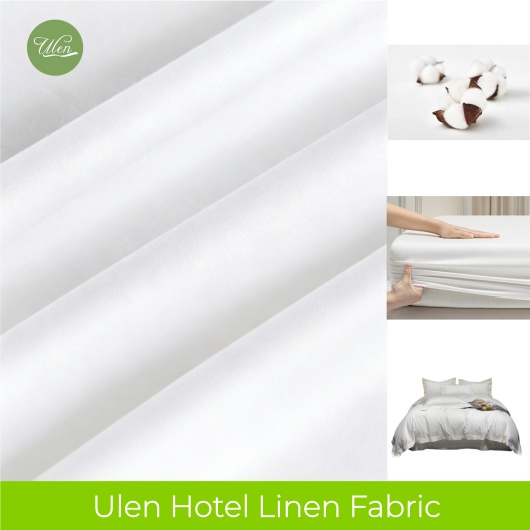
Fabric type: 100% long-staple cotton (such as Egyptian or Pima) offers superior durability and softens over time without pilling. Cotton-rich blends offer the softness of cotton with the crease resistance and durability of polyester.
-
Finish and sizing: Hospitality sheeting is treated for strength and to prevent shrinkage during washing — look for these pre-treatments to ensure durability.
Part 2: Hotel Duvets — The Cloud-Like Sleep Experience
The duvet has progressively replaced the traditional top-sheet-plus-blanket system across hospitality for fundamentally operational reasons. Making a bed with a duvet requires fewer steps, less time, and fewer pieces — a significant operational saving in high-turnover properties.
A poorly chosen duvet insert has direct consequences on guest experience: too hot in summer, insufficient in winter, losing volume after the first washes, or making noise when the guest moves.
Fill Types: Natural vs. Synthetic
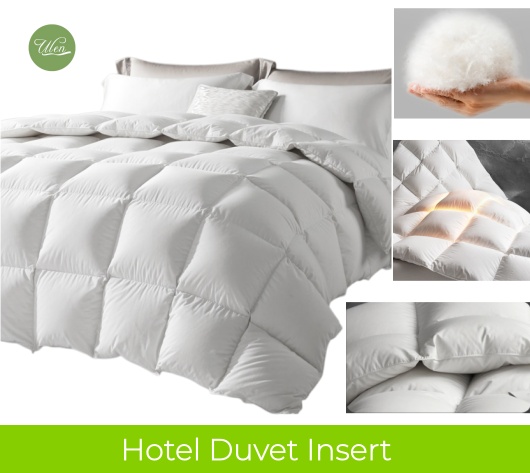
Siliconised Hollow Fibre — This is the most widely used standard in hospitality. It offers the best balance between comfort, durability in industrial laundering, ease of maintenance, and cost. Siliconised hollow fibre withstands frequent wash cycles at medium to high temperatures without losing volume significantly, dries quickly, and is hypoallergenic. Recommended for 2-, 3-, and 4-star hotels.
Down and Feathers — Natural down (duck or goose) offers the most luxurious bed experience: light, fluffy, with thermal regulation superior to any synthetic fibre. Goose down is softer and lighter than duck down and has greater fill power — meaning more warmth with less weight. The disadvantage is maintenance: it requires specific wash programmes, careful drying, and greater delicacy. This is the standard in 5-star hotels and luxury boutique establishments.
Premium Microfibre — An evolution of conventional hollow fibre with a softer feel and greater heat retention. The usual option in 4-star hotels that want something more than standard fibre without going as far as down.
Lyocell and Alternative Natural Fibres — Fibres derived from eucalyptus cellulose, cotton, or bamboo are gaining ground for their sustainability profile and good breathability. Particularly suited to hotels with an eco or wellness positioning.
Understanding Tog Ratings
The tog rating of a hotel duvet determines its heat retention and is the most important variable for matching the product to your climate and rooms.
| Tog Rating | Season / Climate |
|---|---|
| 4.5 or lower | Summer, tropical climates, rooms with powerful AC |
| 7–9 | Temperate climates, spring/autumn use |
| 10.5 | All-season standard for climate-controlled hotel rooms |
| 13.5+ | Cold climates, winter, poorly heated rooms |
Most hotels use 10.5 tog year-round for simplicity. A 10.5 tog duvet offers versatile comfort, providing warmth in cooler conditions and remaining comfortable as room temperatures rise.
Alternative measurement: GSM — Grams per square meter measures the weight of the filling. A 200–250g/㎡ filling is perfect for year-round comfort, while 400g/㎡ and above is reserved for winter or colder regions.
The Shell: What to Look For
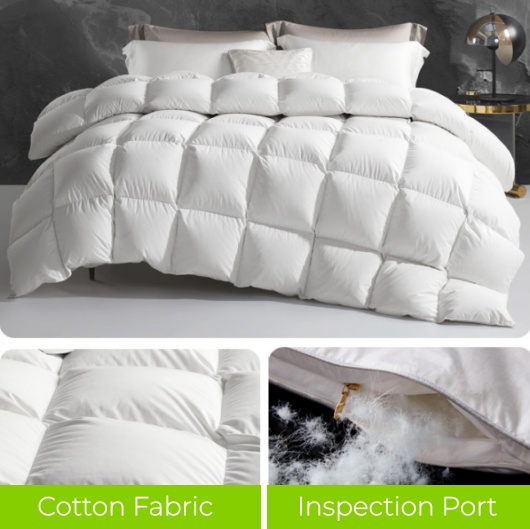
The duvet shell must be down-proof to prevent filling leakage:
-
Thread Count: A 230T weave is the industry standard for hotels — dense enough to be down-proof but breathable for the guest.
-
Yarn Quality: Professional-grade shells should use 40×40 combed cotton. The combing process removes short fibres, resulting in a stronger, smoother yarn that withstands industrial laundering.
Construction for Longevity
-
Box stitch / baffle-box construction: Creates individual boxes that trap the filling in place, preventing it from clumping.
-
Double-needle edging: Reinforced edges prevent fraying and ensure the duvet maintains structural integrity over hundreds of wash cycles.
Maintenance and Lifespan
-
High-quality synthetic duvet: 2–3 years in a busy hotel
-
Premium goose down: 5–7 years with proper maintenance and professional laundering
Part 3: Hotel Pillows — The Most Underrated Factor in Sleep Quality
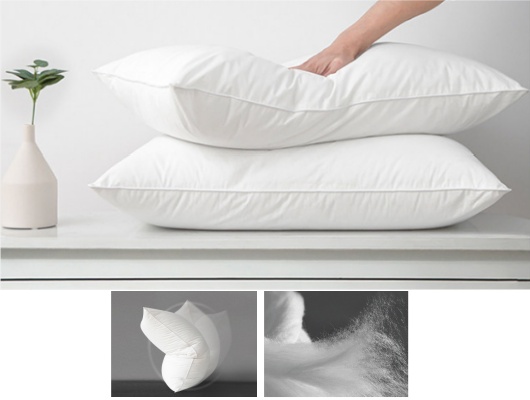
Guests consistently rate pillow comfort as a top factor influencing sleep quality and overall stay satisfaction. The right pillow program helps hotels improve guest comfort and reviews, reduce premature replacement, standardize quality, and control linen costs.
Fill Types Compared
| Fill Type | Feel | Durability | Washability | Best For |
|---|---|---|---|---|
| White Goose Down | Ultra-soft, luxurious | High (with care) | Specialist laundering | Luxury & ultra-luxury tiers |
| White Duck Down | Soft, good loft | High | Specialist laundering | Upscale properties |
| Down Alternative (Microfiber) | Soft, consistent | Very high | Industrial washing | Mid-market; allergy-conscious guests |
| Memory Foam | Firm, supportive | Medium | Spot clean only | Extended-stay, branded sleep programs |
| Latex | Resilient, breathable | High | Spot clean only | Eco-conscious properties |
| Hollow Fiber | Lightweight, affordable | Medium | Industrial washing | Budget and economy tiers |
Fill Power for Down Pillows
Fill power measures the loft of down — how many cubic inches one ounce of down occupies. Higher fill power = lighter pillow with better insulation:
| Fill Power | Quality Tier |
|---|---|
| 450–550 | Standard hotel quality |
| 550–650 | Upscale tier |
| 650–750 | Luxury tier |
| 750+ | Ultra-luxury |
Important: Fill power measures loft, not warmth or durability alone. Always specify both fill power and fill weight when ordering.
Firmness Levels
-
Soft: Great for stomach sleepers and properties that need an ultra-plush option
-
Medium: The most popular standard for most hotels. Provides balanced support for back and side sleepers
-
Firm: Recommended for guests needing extra neck and spine support
Many hotels offer a mix of medium firm pillows to cover all sleeping positions. Most hotels place two to four pillows per sleeper and vary the firmness.
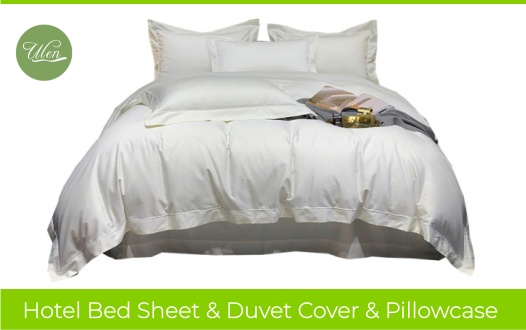
The Dual-Pillow Strategy
Most hotels place one medium pillow and one soft pillow per sleeper. This suits all sleeping styles and reduces complaints.
Pillow Sizing Standards
| Size | Dimensions |
|---|---|
| Standard | 50 × 75 cm (20″ × 26″) |
| Queen | 50 × 80 cm (20″ × 30″) |
| King | 50 × 90 cm (20″ × 36″) |
| Euro Square | 65 × 65 cm (26″ × 26″) |
Regional sizing varies — always specify dimensions explicitly, not just size names.
How Many Pillows Per Bed?
-
Queen Bed: 4 pillows
-
King Bed: 4 pillows
-
Full Bed: 2–4 pillows
When to Replace Hotel Pillows
-
Economy & mid-scale properties: every 6–12 months
-
Upscale properties: every 12–18 months
-
High-turnover environments: every 6 months
Replace pillows early if they become flat or lumpy, stained, hard to fluff, or uneven in fill distribution.
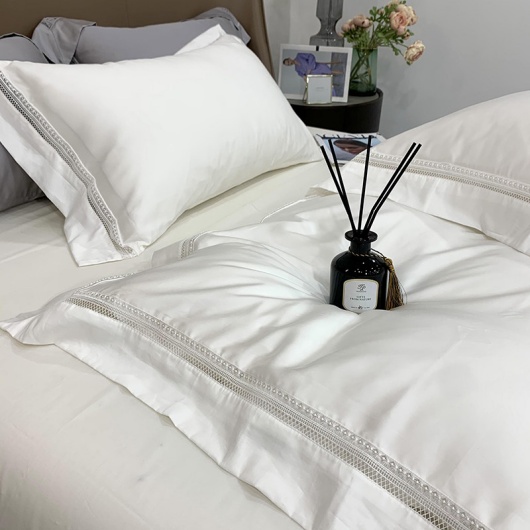
Part 4: The Pillow Menu — Elevating the Guest Experience
A pillow menu is exactly what it sounds like — a selection of pillow types guests can choose from, just like ordering from a restaurant menu. Luxury hotels pioneered the concept, but it‘s now common at upper mid-range properties too.
Options typically range from firm to soft, hypoallergenic to down, and sometimes include specialty options like buckwheat, water-filled, or body pillows.
Common pillow types:
-
Down: Soft and luxurious. Best for stomach and back sleepers
-
Memory Foam: Contouring support. Best for side sleepers and those with neck pain
-
Buckwheat: Firm, adjustable, and breathable
-
Latex: Springy and responsive with medium firmness. Naturally hypoallergenic
-
Down Alternative: Synthetic fill that mimics down‘s softness without allergens. Easier to wash
Conclusion: Building Your Hotel Bedding Program
Selecting the right hotel bedding — sheets, duvets, and pillows — is a delicate balance between guest satisfaction, operational durability, and budget efficiency.
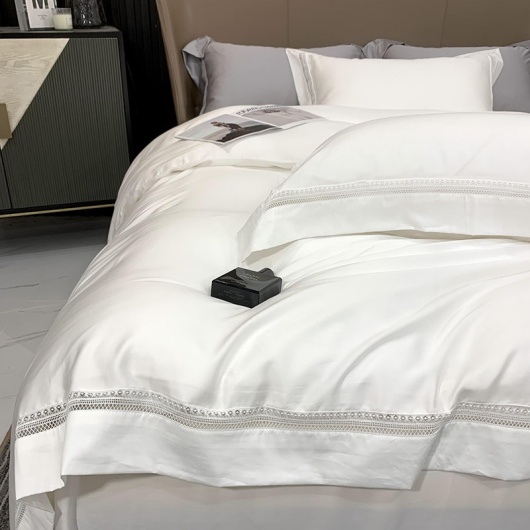
Key takeaways:
-
Sheets: Target 200–400 thread count in percale or sateen weave. Choose 100% long-staple cotton for durability and comfort.
-
Duvets: Match fill type (siliconised hollow fibre for mid-range, down for luxury) and tog rating to your climate and guest expectations. A 10.5 tog all-season duvet works for most climate-controlled properties.
-
Pillows: Offer a mix of medium and firm pillows — the dual-pillow strategy reduces complaints. Consider a pillow menu for enhanced guest experience.
-
Maintenance: Factor in replacement cycles — synthetic duvets last 2–3 years, down lasts 5–7 years. Pillows should be replaced every 6–18 months depending on property tier.
Remember: guests may forget the view, but they will never forget how well they slept. Invest in bedding that delivers the sleep experience your brand promises.
Looking for a trusted partner for your hotel bedding procurement? Contact Ulen today to discuss custom solutions for sheets, duvets, and pillows tailored to your property’s unique needs.