
For hoteliers, every procurement decision is a calculated investment. Nowhere is this balance more critical—and more nuanced—than in selecting bedding linens. Spend too much in the wrong places, and you erode profitability. Skimp on the wrong items, and you compromise guest experience and incur higher long-term costs.
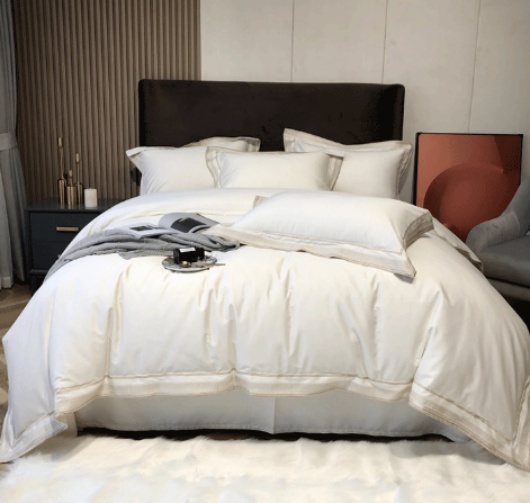
The key to optimization is strategic allocation. This guide provides a clear, actionable framework for determining exactly when to splurge and when to save on your hotel bedding, ensuring every dollar directly enhances guest satisfaction, operational efficiency, and your bottom line.
The Core Principle: Invest in Durability and Direct Guest Touchpoints
Your budget should flow toward items that either: 1) Directly and intensely impact the guest’s sensory experience, or 2) Protect your most valuable assets and ensure long-term durability on hotel bedding sets. Conversely, you can save on components that are less critical to perception or have a shorter functional life.
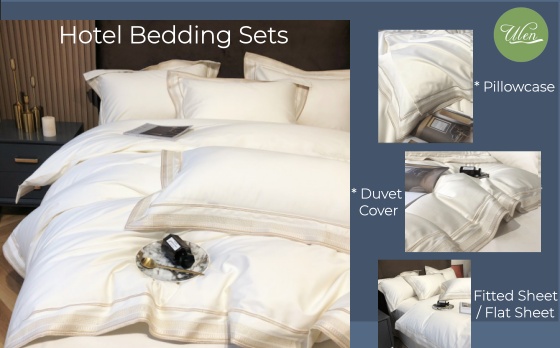
The Splurge vs. Save Decision Matrix
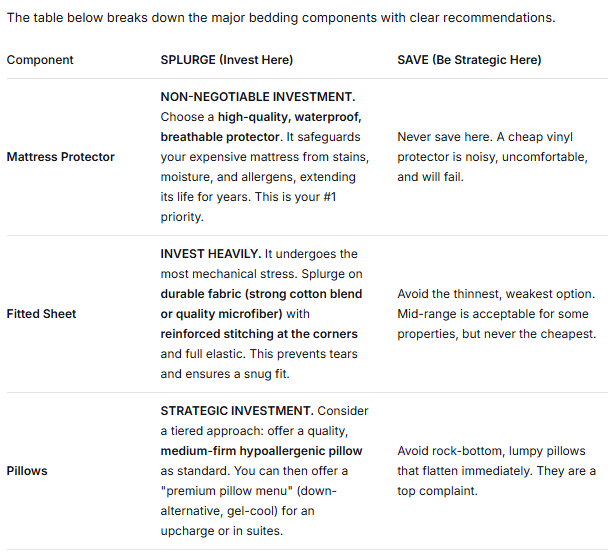
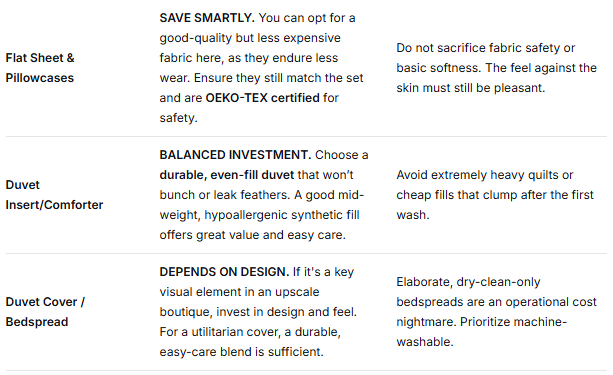
Strategic Guidelines for Smart Spending
When to SPLURGE Without Question:
-
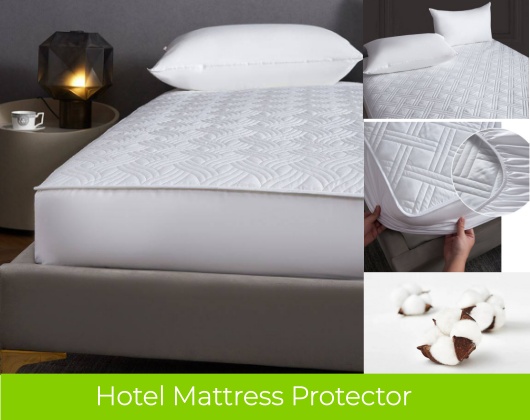
On “Barrier” Items: Anything that protects a more expensive asset (mattress protector over mattress, pillow protector over pillow) is worth the premium.
-
On High-Stress Points: Components subjected to the most physical strain (fitted sheet corners, pillow seams) need superior construction.
-
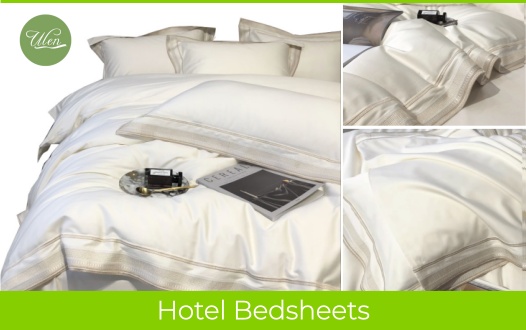
On the “Hand-Feel” Layer: The textile that guests touch most directly (the top surface of the pillowcase and the part of the bed sheet they slide into) should have a comforting, quality feel, even if the lower layers are more economical.
When You Can SAFELY SAVE:
-
On Non-Critical Layers: The flat sheet (often tucked in) and the side of the pillowcase facing away from the guest can be made from a cost-effective, yet still safe and durable, fabric.
-
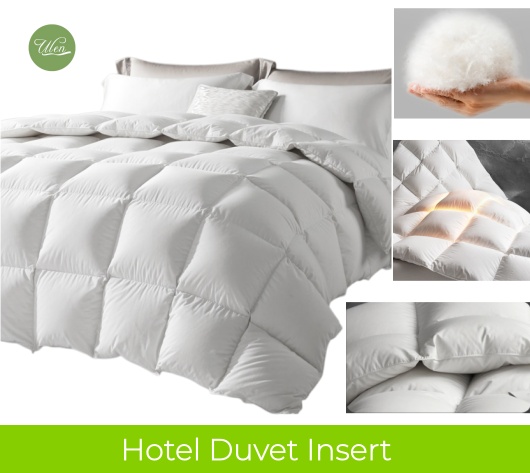
On “Sealed” Components: The internal filling of a duvet or pillow, while important, does not need to be the absolute top-tier if it’s well-contained and performs adequately.
-
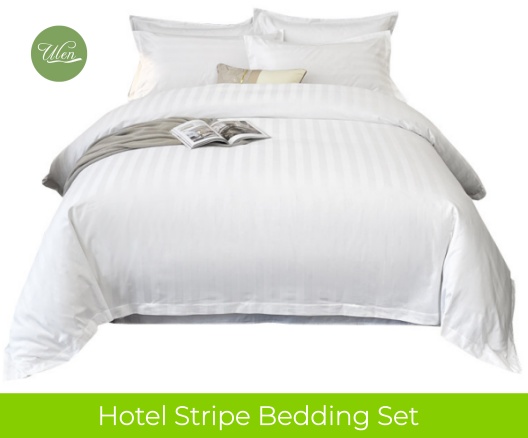
On Simplification: Standardizing colors and styles across all rooms allows for bulk purchasing power, reducing costs per unit on every item.
The Non-Negotiables: What You Should Never Compromise On
Regardless of your “save” decisions, these elements are mandatory for any reputable hotel:
-
Safety Certification: OEKO-TEX Standard 100 or equivalent. This is non-negotiable for any textile touching guest skin.
-
Commercial Laundry Resilience: Every item must withstand industrial washing without falling apart, shrinking excessively, or fading dramatically.
-
Operational Practicality: All hotel bedding must be machine-washable, dryable, and designed for efficient housekeeping turnover.
Conclusion: From Expense to Strategic Asset
Viewing bedding through the “splurge vs. save” lens transforms it from a line-item expense into a portfolio of strategic assets. By deliberately directing your investment toward durability and key guest touchpoints, you build a bedding program that maximizes perceived luxury while minimizing total lifecycle cost. This disciplined approach is the hallmark of a savvy, guest-centric, and profitable hotel operation.
Need Help Optimizing Your Bedding Investment Strategy?
Ulen expertise lies in helping hotels build the perfect, cost-effective bedding program. We offer tiered product lines that align with this “splurge vs. save” philosophy, providing premium essentials for critical areas and high-value options for others.
Contact us for a Custom Bedding Audit. We’ll analyze your current spend and provide a tailored plan showing exactly where you can reallocate your budget for better guest reviews and stronger ROI.
FAQs: Hotel Bedding Procurement: When to Splurge vs. Save for Maximum ROI
1. What is the core principle behind splurging vs. saving on hotel bedding?
Invest strategically: splurge on items that directly impact the guest’s sensory experience or protect valuable assets (mattress protectors, fitted sheets). Save on components that are less critical to perception (flat sheets, the underside of pillowcases) or have a shorter functional life. This approach maximizes perceived luxury while minimizing total lifecycle cost.
2. Which bedding items should I always splurge on?
Always splurge on:
-
Mattress and pillow protectors: These protect your most expensive assets and extend their lifespan
-
Fitted sheets: They endure the most physical strain and require reinforced corners and durable elastic
-
Pillowcases (top surface): The textile guests touch most directly—invest in a quality hand-feel
-
Pillow inserts: Comfort here directly affects sleep quality and guest reviews
3. Where can I safely save money on hotel bedding?
You can safely save on:
-
Flat sheets: Often tucked in and less directly touched by guests
-
Underside of pillowcases: The side facing away from the guest
-
Duvet inserts: Internal filling does not need to be absolute top-tier if well-contained and performs adequately
-
Standardizing colors and styles: Simplification across all rooms enables bulk purchasing power
4. What is a “barrier” item, and why should I splurge on it?
Barrier items protect more expensive assets. A quality mattress protector prevents stains, allergens, and wear from reaching the mattress—extending its lifespan by years. Similarly, a pillow protector keeps pillows fresh and hygienic. Spending more here protects a far larger investment and reduces long-term replacement costs.
5. How do I prioritize spending across different bedding components?
Use the splurge vs. save matrix:
-
Highest priority (splurge): Fitted sheets, pillow protectors, mattress protectors, pillowcases (top surface)
-
Mid priority: Pillow inserts, duvet inserts
-
Lower priority (save): Flat sheets, decorative layers, standardized colors for bulk pricing
This ensures your budget flows where it matters most for guest experience and asset protection.
6. What construction details justify splurging on fitted sheets?
Look for:
-
Reinforced corner seams with bar-tacking or double-stitching
-
Full elastic around the entire hem (not just corner straps)
-
Deep pockets (at least 15 inches) to accommodate modern mattresses
-
High-quality cotton-polyester blend with 200–250 thread count
These details ensure fitted sheets withstand hundreds of wash cycles without failing.
7. Can I use different quality levels within the same bedding set?
Yes. A tiered quality strategy is smart procurement. Invest in a premium fitted sheet (the most stressed component) while pairing it with a slightly lighter-weight, cost-effective flat sheet and pillowcases. As long as all pieces are OEKO-TEX certified and maintain a consistent guest-facing appearance, this approach optimizes budget without sacrificing comfort.
8. How does standardization help me save on bedding costs?
Standardizing sizes, colors, and styles across all rooms allows you to:
-
Maximize bulk-order discounts by consolidating volume
-
Simplify inventory management with fewer SKUs
-
Reduce par levels by enabling cross-utilization between rooms
-
Streamline laundry sorting and processing
This simplification reduces cost-per-unit across every item.
9. What should I never compromise on, even when saving?
Three elements are non-negotiable:
-
OEKO-TEX Standard 100 certification: Guarantees textiles are free from harmful substances
-
Commercial laundry resilience: Every item must withstand industrial washing without excessive shrinkage, fading, or structural failure
-
Operational practicality: All bedding must be machine-washable, dryer-safe, and designed for efficient housekeeping turnover
Compromising these undermines guest safety and operational efficiency.
10. How do I calculate ROI when deciding where to splurge?
Use cost-per-use analysis:
-
Cost-Per-Use = Purchase Price ÷ Expected Wash Cycles
A premium fitted sheet lasting 350 cycles may have a lower cost-per-use than a budget option lasting 150 cycles. Additionally, splurging on protectors extends the life of expensive mattresses and pillows—often delivering 5–10x ROI in avoided replacement costs.
11. Is it worth splurging on pillow inserts for all room types?
Yes. Pillow comfort is one of the most frequently cited factors in guest reviews. Invest in quality pillow inserts with good loft, support, and durability. Consider a tiered approach: premium pillows for higher-tier rooms, and solid mid-range pillows for standard rooms—but avoid economy-grade pillows that flatten quickly and generate complaints.
12. How do I balance upfront cost with long-term durability?
Calculate total cost of ownership (TCO) . A $60 fitted sheet lasting 350 cycles delivers better long-term value than a $30 sheet lasting 150 cycles. Factor in:
-
Replacement frequency
-
Labor costs for housekeeping (easier-to-fit sheets save time)
-
Laundry energy costs (quick-drying fabrics save money)
-
Guest satisfaction impact (fewer complaints = better reviews)
13. What role does laundry efficiency play in splurge vs. save decisions?
Laundry efficiency directly impacts operational costs. Splurge on fabrics that are wrinkle-resistant and quick-drying (premium blends, microfiber). These reduce ironing labor, lower energy consumption, and accelerate turnover—saving thousands annually. Skimping on fabric quality can actually increase total costs through higher laundry expenses.
14. How do I test whether a “save” item still meets quality standards?
Request samples and perform a wash test (5–10 industrial cycles) . Evaluate:
-
Shrinkage: Less than 5–8% is acceptable
-
Colorfastness: No fading or bleeding (Grade 4–5)
-
Seam integrity: No fraying or unraveling
-
Softness retention: Should not become harsh or scratchy
-
Safety certification: OEKO-TEX Standard 100 verified
If a lower-cost item passes these tests, it’s a legitimate save.
15. How can a supplier help me implement a splurge vs. save bedding strategy?
Partner with a supplier who offers:
-
Tiered product lines aligned with this philosophy
-
Transparent specifications (GSM, thread count, blend ratios, construction details)
-
Wash test data for all items
-
Bulk ordering and standardization support to maximize volume discounts
-
Customization options to differentiate higher-tier rooms
A knowledgeable supplier can provide a custom bedding audit, analyzing your current spend and recommending where to reallocate budget for better guest reviews and stronger ROI.