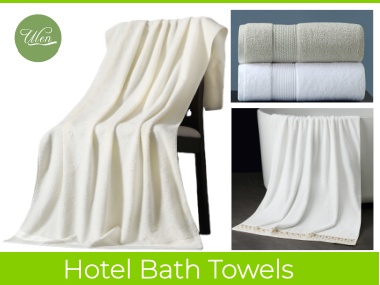
For hoteliers and procurement managers, a bath towel’s initial softness is a seductive but fleeting quality. In the harsh reality of commercial laundry—with its high temperatures, aggressive chemicals, and daily wear—softness alone is a poor predictor of longevity. A towel that feels luxurious on day one but pills, fades, and loses absorbency after 50 washes is a costly liability.
True value lies in durability: the ability to withstand hundreds of industrial cycles while maintaining performance. This guide shifts the focus from first impression to long-term investment, outlining the five essential, measurable metrics that determine a commercial bath towel’s true lifespan and total cost of ownership.
1. GSM: The Foundation of Substance and Longevity
GSM (Grams per Square Meter) measures the towel’s weight and density. It is the single most objective indicator of durability and quality.
-
What it measures: Higher GSM indicates more cotton per square meter, resulting in a thicker, more substantial fabric.
-
Durability Link: A towel with higher GSM has more fibers to withstand abrasion and tensile stress during washing and use. Thin, low-GSM towels wear out quickly.
-
Commercial Sweet Spot: Aim for 500 to 600 GSM. This range provides excellent absorbency, a luxurious feel, and optimal durability without taking excessively long to dry. Towels below 450 GSM are often too lightweight for commercial use, while those above 700 GSM may dry too slowly, impacting laundry turnover.
2. Cotton Quality & Fabric Construction: The Fiber Integrity
Not all cotton is created equal. The source and preparation of the fiber are critical.
-
Long-Staple vs. Short-Staple Cotton: Long-staple cotton (like Egyptian, Pima, or Supima) has longer, stronger individual fibers. These create smoother, more resistant yarns that are less prone to pilling and breaking.
-
Combed Cotton: This is a non-negotiable for durability. The combing process removes short, weak fibers and impurities, leaving only the long, strong fibers to be spun into yarn. This results in a smoother, stronger, and more absorbent towel that retains its integrity far longer.
-
Loop Density: In addition to weight, the density and integrity of the terry loops matter. Tight, uniform loops will hold up better than loose, uneven ones.
3. Hem & Stitching: The Stress Point Engineering
The edges of a towel endure immense mechanical stress in commercial washing and drying machines. Poor construction here leads to immediate failure.
-
Double-Turned Hem: Look for hems where the fabric is folded over twice and then stitched. This encloses the raw edge completely, preventing fraying.
-
Reinforced Stitching (e.g., Double Needle Stitch): The hem should be secured with robust, close stitching. A double row of stitching is a strong sign of commercial-grade construction designed to resist seam splitting.
4. Absorbency Retention: The Performance Benchmark Over Time
A towel’s core function is to dry. Its ability to maintain absorbency after repeated laundering is a direct test of fabric integrity.
-
The Test: High-quality, durable cotton fibers are hydrophilic (water-loving). As cheap towels degrade, their fibers become coated with broken-off microfibrils (pilling) and may suffer from chemical residue buildup, causing water to bead up on the surface rather than being absorbed.
-
How to Evaluate: Request a pre-laundered sample (washed 10+ times). Perform a simple water test: pour a small amount of water on the towel. Does it absorb instantly, or does it sit on top? A durable towel retains its quick absorbency.
5. Colorfastness & Pilling Resistance: The Signs of Degradation
These are the most visible indicators of a towel breaking down.
-
Colorfastness: Dyes must be locked into the fiber to withstand bleach, high pH detergents, and high heat. Fading or bleeding color is a sign of poor dye quality and fabric degradation. Ask suppliers for AATCC test data on colorfastness to washing and chlorinated water.
-
Pilling Resistance: Pilling (those small, fuzzy balls) occurs when short fibers work loose from the yarn surface. It is a sign of inferior fiber quality or weak yarn construction. Durable, combed long-staple cotton minimizes pilling. The Martindale test is a standard measure for pilling resistance.
The Non-Negotiable: OEKO-TEX® Standard 100 Certification
While not a durability metric per se, this certification is essential. It verifies the towel is free from harmful levels of over 100 regulated substances. It ensures the fabric’s chemistry won’t break down unexpectedly or harm guests, which is foundational to a safe, long-lasting product.
Your Commercial Towel Durability Checklist
Before your next purchase, use this actionable list:
-
Ask for Specifications: “What is the GSM? Is it made from combed, long-staple cotton?”
-
Demand Test Data: “Can you provide lab reports for colorfastness (AATCC 61) and pilling resistance?”
-
Physically Inspect: Feel the weight. Examine the hem. Is it double-turned and securely stitched?
-
Perform the Ultimate Test: Always get a pre-washed sample. Launder it 10-15 times yourself. Then assess:
-
Has it lost significant weight (thinned out)?
-
Does it still absorb quickly?
-
Is there noticeable pilling or fading?
-
Does the hem remain intact?
-
Conclusion: Investing in Cycles, Not Just Cotton
Evaluating a commercial towel requires looking past the showroom. By focusing on GSM, fiber quality, construction, absorbency retention, and colorfastness, you invest in towels measured in cost-per-use—a metric where true durability always wins. This disciplined approach protects your budget, ensures consistent guest satisfaction, and minimizes operational waste for years.
Ready to Test Towels That Are Built to Last?
Our commercial bath towels are engineered against these five durability metrics. We provide full specification sheets, independent test data, and samples you can put through your own rigorous laundry trial.
Contact us to request our Durability Test Kit and technical dossier. See and feel the difference that truly commercial-grade construction makes.