For hotel procurement managers, selecting the right napkins involves far more than choosing a color that matches the dining room. Napkins are touched by every guest, laundered after every use, and replaced far too often when poor choices are made. They sit at the intersection of guest experience, operational efficiency, and long-term cost control.
This guide provides a data-driven framework for evaluating hotel napkin options—helping you make informed decisions that satisfy both your finance team and your clientele.
Why Napkins Deserve Strategic Attention
Napkins may seem like a minor line item in your table linen budget, but their cumulative impact is substantial. A 100-room hotel with a restaurant and banquet operation may put thousands of napkins through industrial laundry each week. The wrong choice means:
-
Accelerated replacement cycles due to fraying, fading, or shrinkage
-
Increased labor costs from ironing and stain pre-treatment
-
Inconsistent guest experiences when napkins look worn or feel uncomfortable
-
Brand dilution when linens appear mismatched or tired
Conversely, well-chosen napkins reduce total cost of ownership, streamline laundry operations, and reinforce your property’s commitment to quality.
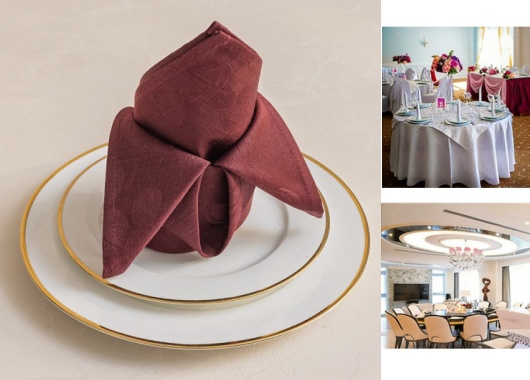
Material Matters: Cotton vs. Polyester vs. Blends
The foundation of any napkin decision is material selection. Each option presents distinct trade-offs that procurement managers must weigh against their property’s specific needs .
100% Cotton Napkins
Cotton napkins represent the traditional standard for luxury dining. Made entirely from natural fibers, they offer exceptional softness and absorbency that guests immediately notice . High-thread-count cotton using long-staple fibers like Egyptian or Supima delivers a premium hand feel that signals quality.
Advantages:
-
Superior softness and guest comfort
-
Excellent liquid absorption
-
Natural, biodegradable material
-
High-end appearance suitable for fine dining
Considerations:
-
Prone to wrinkling, requiring ironing after each wash
-
Higher shrinkage potential (typically 5-8% without pre-treatment)
-
More vulnerable to wear and pilling over time
-
Higher cost-per-unit and shorter lifespan in high-turnover environments
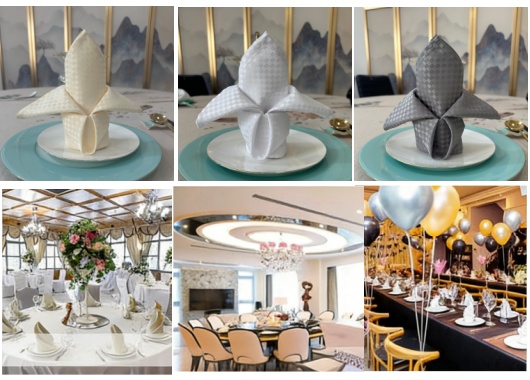
For luxury properties where guest experience trumps all other considerations, 100% cotton remains the gold standard—but procurement managers must budget for higher replacement frequency and labor costs.
Cotton-Polyester Blend Napkins
Blended fabrics—typically 60% cotton/40% polyester or 50%/50%—have become the workhorse of the hospitality industry, and for good reason. They combine the softness and absorbency of cotton with the durability and easy-care properties of polyester.
Advantages:
-
Enhanced durability and tear resistance
-
Excellent wrinkle resistance—minimal or no ironing required
-
Faster drying times, reducing energy costs
-
Better color retention through repeated washing
-
Lower cost-per-use than pure cotton
-
Resists shrinkage and fading
Considerations:
-
Slightly less absorbent than 100% cotton
-
Less biodegradable than natural fibers
-
May not convey the same luxury perception as pure cotton
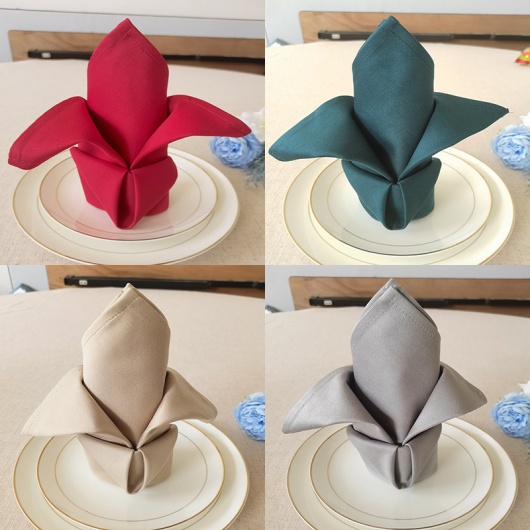
For most hotel applications—banquets, restaurants, and even many upscale dining rooms—blended napkins offer the optimal balance of guest experience and operational efficiency.
100% Polyester Napkins (Especially Spun Polyester)
Traditional polyester napkins gained a reputation for having a plastic-like feel, but modern spun polyester has transformed the category. Spun polyester fibers are mechanically softened through repeated twisting, creating a texture remarkably similar to cotton.
Advantages of Spun Polyester:
-
Cotton-soft feel without the wrinkles
-
Exceptional durability—withstands hundreds of industrial wash cycles
-
Stain-release finish makes laundering easier
-
Heavier weight provides better opacity and draping
-
Ideal for intricate napkin folds that hold their shape
-
Completely machine washable and dryer safe
Considerations:
-
Lower absorbency than natural fibers
-
Not biodegradable
-
May not satisfy guests seeking “natural” materials
For banquet halls, conference centers, and high-volume restaurants, spun polyester napkins deliver outstanding value with minimal maintenance requirements.
Key Technical Specifications
Beyond material composition, procurement managers should evaluate several technical parameters that predict real-world performance.
Thread Count and Fabric Weight
Higher thread count generally indicates finer yarns and a denser weave, contributing to softness and durability. Luxury cotton napkins typically range from 200 TC and above . For blends and polyesters, fabric weight (measured in GSM or grams per square meter) matters more—heavier fabrics resist wear and drape better.
Colorfastness Ratings
Napkins endure frequent high-temperature washing with aggressive detergents and sometimes bleach. Look for suppliers who provide colorfastness ratings (Grade 4-5 is ideal) and use reactive dyes rather than pigment dyes, which lock color into fibers rather than merely coating the surface .
Shrinkage Tolerance
Industry standard for quality napkins is less than 5% shrinkage after multiple washes . Always request pre-shrunk fabrics or factor expected shrinkage into your sizing specifications.
Hem and Stitch Quality
Examine the hemming—double-stitched or reinforced borders resist fraying far longer than basic single-needle hems . This seemingly minor detail significantly impacts lifespan.
Sizes and Folds: Matching Form to Function
Hotel napkins come in standard sizes that correspond to different applications:
-
Cocktail napkins (10-12 inches): Bars, receptions, beverage service
-
Luncheon napkins (14-16 inches): Casual dining, breakfast, cafes
-
Dinner napkins (18-22 inches): Fine dining, banquets, formal events
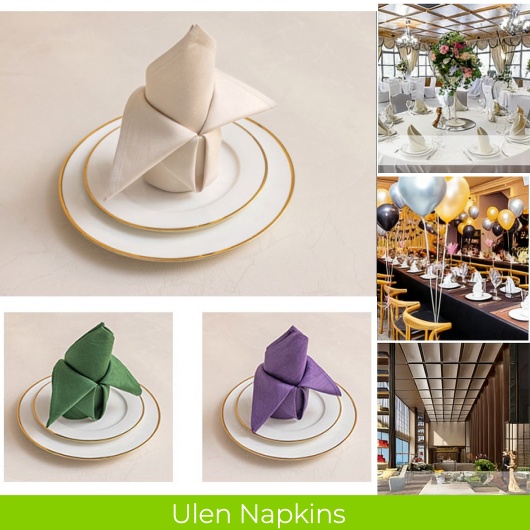
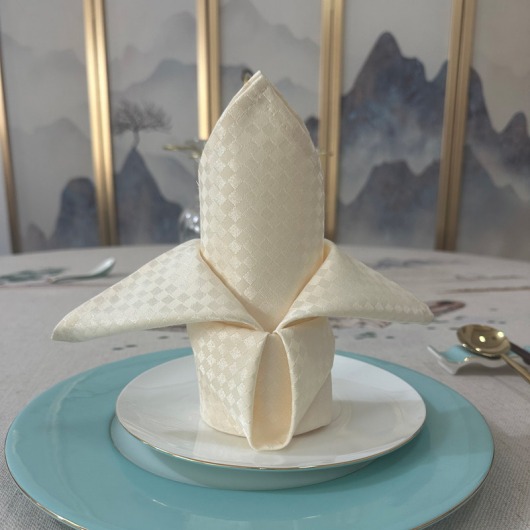
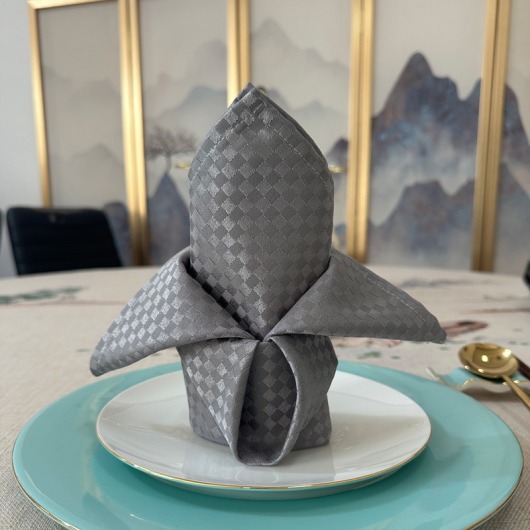
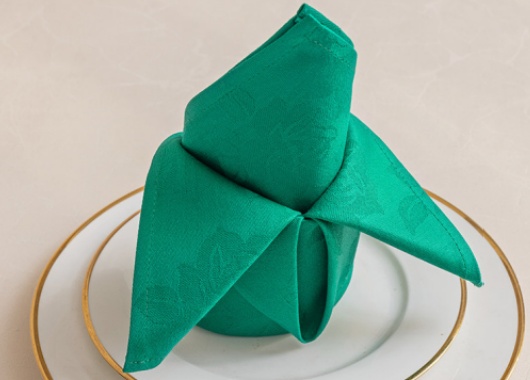
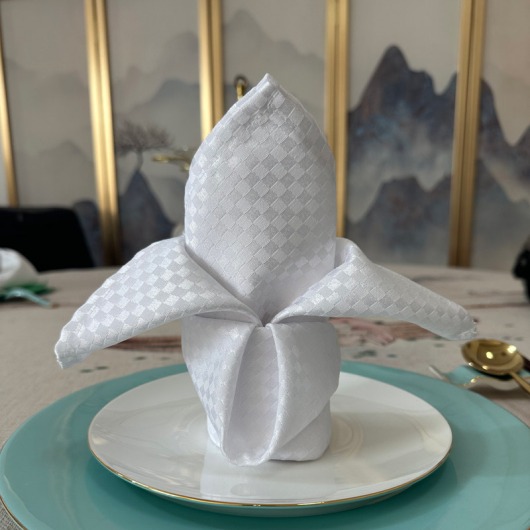
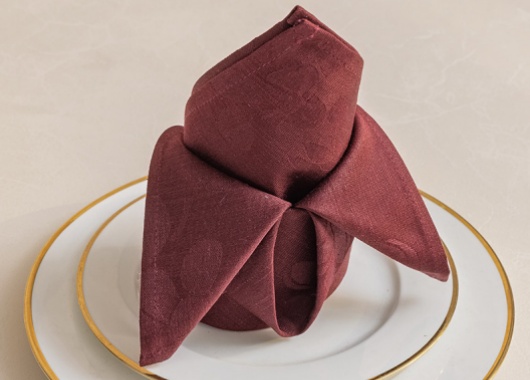
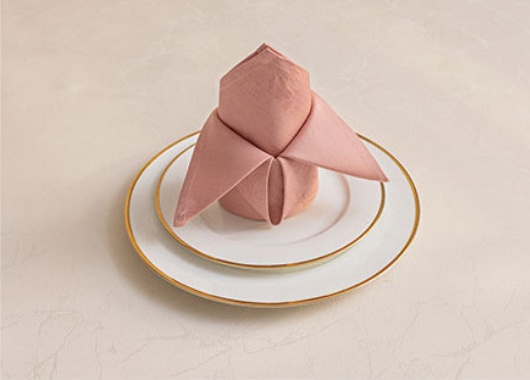
Larger napkins (22 inches) allow for elaborate folding techniques that enhance tablescape design—from classic pyramid folds to bishop’s hat presentations. Spun polyester and cotton-polyester blends hold creases better than soft 100% cotton, making them preferable for venues that emphasize napkin artistry.
Calculating True Cost-Per-Use On Napkins
Procurement decisions based solely on unit price often lead to higher long-term costs. Instead, calculate cost-per-use:
Cost-Per-Use = (Purchase Price) / (Expected Wash Cycles)
Industry benchmarks suggest:
-
Standard cotton napkins: 150-200 wash cycles
-
High-quality blends and spun polyester: 300+ wash cycles
A $5 cotton napkin lasting 150 cycles costs $0.033 per use. A $6 spun polyester napkin lasting 300 cycles costs $0.020 per use—a 40% reduction in cost-per-use despite higher upfront investment.
Factor in labor savings from reduced ironing and stain treatment, and the ROI case for durable, easy-care napkins becomes compelling.
Inventory Planning: The Par Level Formula
Proper inventory levels prevent service disruptions while minimizing capital tied up in linen storage. The standard formula:
(Seat Count × Daily Turns × Par Level) + Buffer = Total Napkins Needed
Where:
-
Daily Turns = Number of times each seat is used per day
-
Par Level = 2-3 (one set in use, one in laundry, one in storage)
-
Buffer = 15-20% for unexpected events, stains, or delays
For a 100-seat restaurant with 2 turns daily and a 3-par system:
100 × 2 × 3 = 600 napkins + 120 buffer = 720 napkins total
Sourcing Strategies for Procurement Managers
Domestic vs. International Suppliers for Hotel Napkins
China remains the world’s largest producer of commercial textiles, offering economies of scale and competitive pricing . Leading suppliers demonstrate on-time delivery rates above 95% and response times under 4 hours—critical metrics for reliable partnerships .
Supplier Evaluation Criteria
When vetting napkin suppliers, look beyond price to assess :
-
Certifications: OEKO-TEX Standard 100, ISO 9001, BSCI for ethical manufacturing
-
Sample policies: Quality suppliers offer samples (often fee-based, refundable with order)
-
MOQ flexibility: Can they accommodate your property’s volume requirements?
-
Communication responsiveness: Sub-4-hour response times indicate operational efficiency
-
References and reorder rates: High reorder rates (e.g., 27% for top performers) signal client satisfaction
The Sample Imperative
Never commit to bulk orders without physical sample testing. Wash samples 10-15 times in your commercial laundry to evaluate :
-
Shrinkage percentage
-
Color retention
-
Pilling or surface deterioration
-
Edge fraying
-
Stain release performance
Special Considerations for Branded Napkins
Many hotels use napkins as brand touchpoints through custom embroidery or woven logos. When pursuing customization :
-
Confirm thread color matching to your brand palette (Pantone matching available)
-
Verify that embroidery or weaving doesn’t compromise fabric integrity
-
Test logo appearance after multiple washes
-
Discuss MOQs for custom designs—typically higher than for standard items
Sustainability Considerations
Environmental impact increasingly influences procurement decisions. Options to consider :
-
100% cotton napkins: Fully biodegradable but shorter lifespan means more frequent replacement
-
Recycled polyester blends: Reduced petroleum footprint while maintaining durability
-
FSC-certified paper napkins: For disposable applications, look for certified sustainable sources
-
Longer-life products: The most sustainable napkin is one that doesn’t need frequent replacement
Some suppliers now offer organic cotton options with GOTS certification, appealing to eco-conscious properties and guests .
Frequently Asked Questions for Procurement Managers
14. How long do samples take to arrive?
Expect 7-20 days for sampling, depending on complexity. Simple designs with existing fabrics take less time; custom embroidery or special dyes extend the timeline .
Making the Final Decision: Hotel Napkins
The right hotel napkin balances three sometimes-competing priorities:
-
Guest experience: Softness, absorbency, and visual appeal
-
Operational efficiency: Easy laundering, minimal ironing, quick drying
-
Financial performance: Competitive cost-per-use and extended lifespan
For most properties, a cotton-polyester blend or high-quality spun polyester napkin delivers the optimal mix of these factors. Luxury venues with fine dining operations may justify 100% cotton for its unmatched natural feel. Properties emphasizing sustainability might prioritize organic cotton or recycled materials.
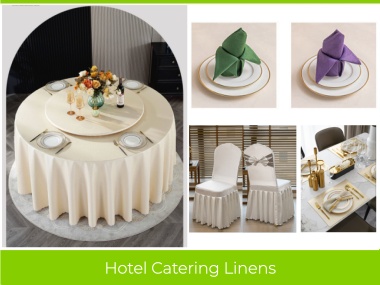
Whichever path you choose, rigorous supplier evaluation, sample testing, and lifecycle cost analysis on table linens, like napkins, tablecloths, placemat, and chair covers will ensure your hotel linens investment supports both guest satisfaction and your bottom line—meal after meal, wash after wash.