
In hotel procurement, the seductive allure of a low unit price is a powerful trap. A $8 bath towel or a $25 robe seems like an easy win for the budget. But this focus on the initial price tag is a critical financial error that costs properties thousands in hidden expenses, from premature replacements to guest dissatisfaction.
True cost isn’t found on the invoice; it’s measured over hundreds of laundry cycles, guest interactions, and online reviews. For strategic hoteliers, the only metric that matters is true value—the optimal balance of performance, longevity, and guest perception over time. This Ulen guide moves beyond price to show you how to calculate the real worth of every hotel bath linen, like bath towel and robe, ensuring your investment pays dividends in comfort, reputation, and profitability.
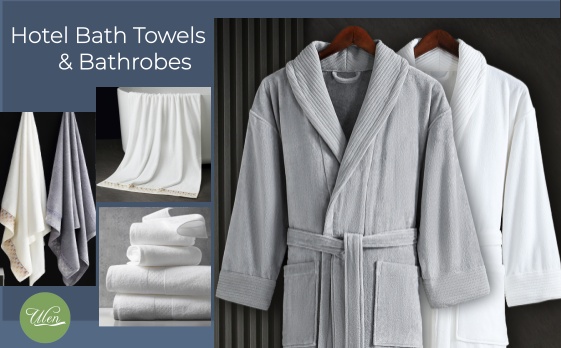
The Illusion of Cheap: A Cost-Per-Use Case Study
Consider two bath towel options for a 100-room hotel:
-
Option A (Low Price): $8 per towel. It feels stiff initially, pills heavily, loses absorbency, and becomes threadbare after 80 washes.
-
Option B (Value Price): $18 per towel. It’s made of high-quality combed cotton, remains soft and absorbent, and retains its integrity for 220 washes.
A quick glance suggests Option A “saves” $10. But let’s calculate Cost-Per-Use (CPU), the definitive metric for true value for hotel bathrobe.
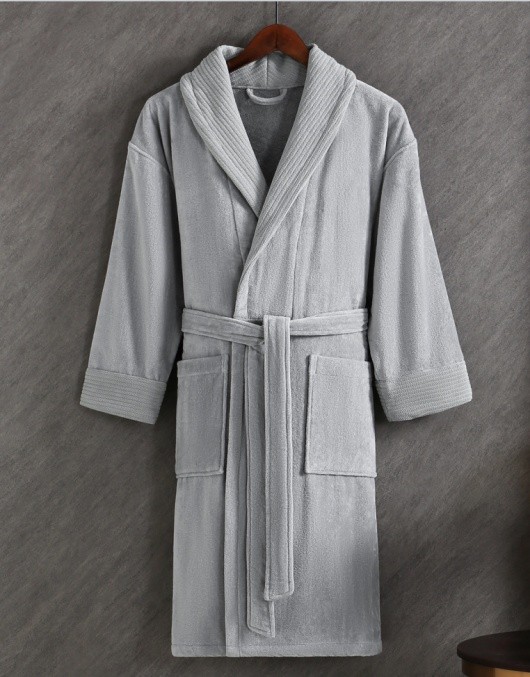
CPU = Total Cost ÷ Total Usable Laundry Cycles
-
Option A CPU: $8 ÷ 80 cycles = $0.10 per guest use
-
Option B CPU: $18 ÷ 220 cycles = $0.082 per guest use
The Result: The “cheap” towel is actually 22% more expensive every time a guest uses it. To equip 100 rooms, you’d need to buy 275 of Option A to match the lifespan of 100 of Option B, spending $2,200 vs. $1,800. The cheaper option costs more and delivers a inferior guest experience on hotel robe.
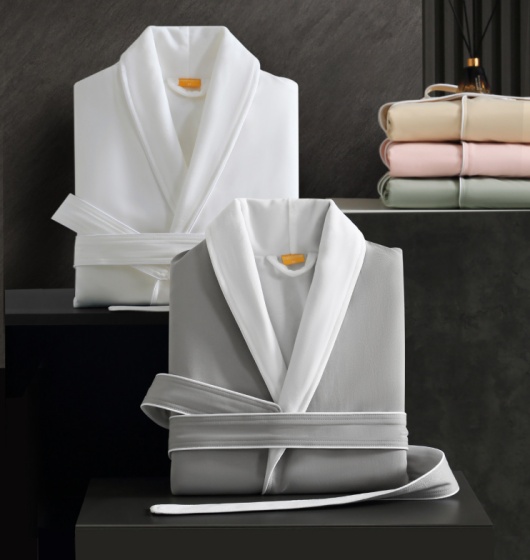
The Four Pillars of True Value for Bath Towels & Robes
To achieve a low CPU and high ROI, you must evaluate these four pillars:
-
Commercial Durability (The Lifespan Engine): This is the cornerstone of value.
-
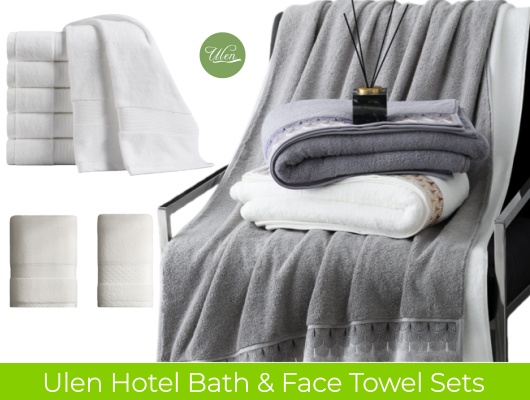
For Towels: Fiber Quality (combed, long-staple cotton), GSM Density (500-600 is optimal), and Hem Construction (double-stitched).
-
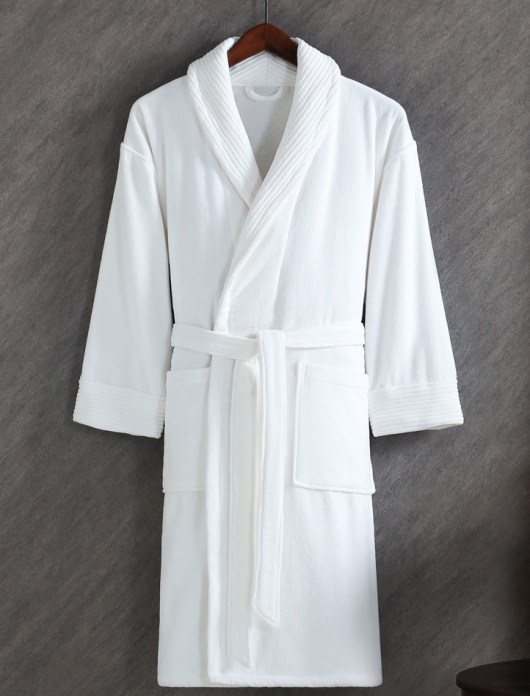
For Robes: Seam Strength (reinforced at stress points), Fabric Integrity (terry loops that don’t pull), and Colorfastness.
-
-
Operational Efficiency (The Hidden Cost Driver):
-
Drying Speed: Towels and robes made from performance blends or high-twist cotton dry significantly faster, reducing energy costs and increasing laundry turnover. A hotel robe that dries in 45 minutes vs. 90 minutes doubles your inventory flexibility.
-
Labor & Care: Wrinkle-resistant fabrics and colorfast dyes reduce sorting time, ironing needs, and replacement due to fading.
-
-
Guest Satisfaction & Perception (The Revenue Guard):
A towel’s hand-feel, absorbency, and weight directly impact the luxury perception of your brand. A robe that stays plush and comfortable for its entire lifecycle supports positive reviews and repeat business, protecting your average daily rate (ADR). Poor-quality linens directly undermine your room’s value proposition.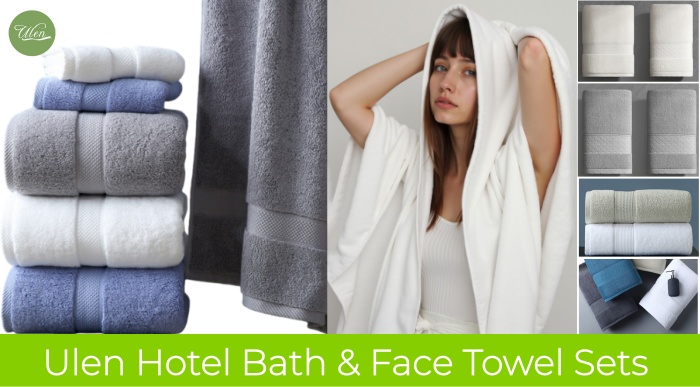
-
Certified Safety (The Non-Negotiable Foundation):
OEKO-TEX Standard 100 certification is not an extra—it’s a baseline requirement. It verifies the textiles are free from harmful substances, ensuring guest safety and mitigating your liability. It is a fundamental component of a product’s true value.
Your Actionable Framework: How to Procure for True Value
-
Demand Performance Data: Ask suppliers: *”What is the expected lifespan in wash cycles? Can you share pilling, absorbency, and tensile strength test reports after 100+ washes?”*
-
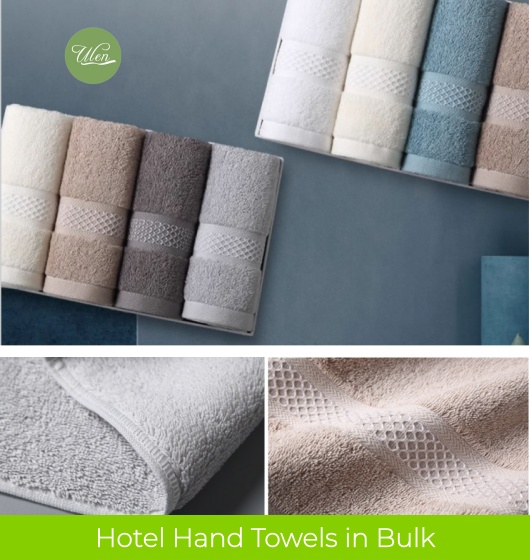
Conduct the Ultimate Test: Always request a pre-laundered hotel towel sample. Wash and dry it 5-10 times in conditions mimicking your own laundry. Does it degrade? This hands-on test is your most powerful due diligence tool.
-
Calculate CPU Before Buying: Use the simple formula on all shortlisted products. Present the CPU to decision-makers to justify intelligent, long-term investments over short-term “savings.”
-
Look for Vertical Integration: Suppliers who control manufacturing from fabric yarn raw material to finished product (vertical manufacturers) can often provide superior durability at a better CPU because they eliminate middleman margins and prioritize quality control.
Conclusion: Investing in Assets, Not Consumables
Shifting your mindset from buying disposable consumables to investing in durable assets is the mark of a sophisticated operator. By adopting the Cost-Per-Use model and evaluating the Four Pillars of True Value, you transform your bath linen procurement from a repetitive cost into a strategic advantage.
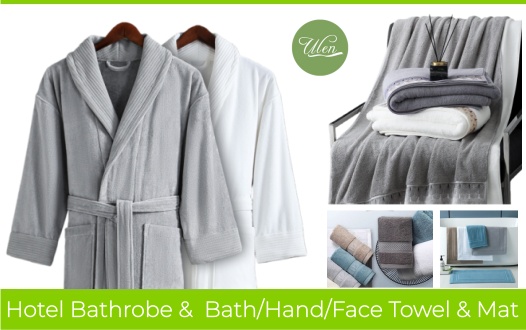
You no longer buy towels and robes; you invest in guest comfort amplifiers, operational efficiency drivers, and brand reputation protectors—all measurable by a single, powerful number.
Ready to Calculate the True Value of Your Hotel Linens?
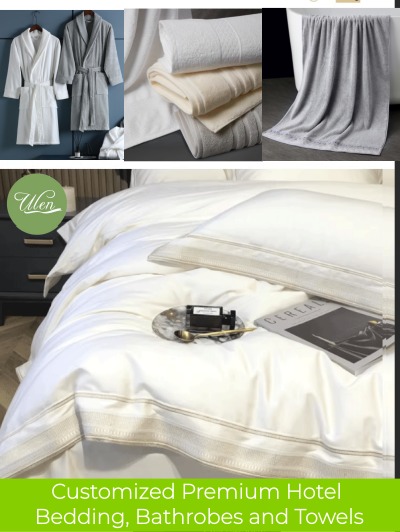
Ulen engineers our hotel bath towels and robes with one goal: to deliver the lowest possible Cost-Per-Use. We provide transparent lifespan data and commercial-grade construction designed to excel across all four value pillars.
FAQs: Hotel Bath Linens: True Value vs. Low Price – How to Calculate Cost-Per-Use and Maximize ROI
1. Why is focusing on the lowest unit price a mistake for hotel bath linens?
A low unit price often leads to hidden costs: premature replacement, frequent pilling, loss of absorbency, and guest complaints. The true cost is measured over hundreds of laundry cycles. A seemingly cheap towel that wears out quickly has a higher cost-per-use than a more durable, slightly more expensive option—making the “cheap” choice actually more expensive in the long run.
2. What is cost-per-use (CPU), and how do I calculate it for towels and robes?
Cost-per-use (CPU) is the total purchase price divided by the total usable laundry cycles.
Formula: CPU = Purchase Price ÷ Expected Wash Cycles
Example: An $8 towel lasting 80 cycles costs $0.10 per use. An $18 towel lasting 220 cycles costs $0.082 per use. The “expensive” towel is 22% cheaper per guest use and delivers better quality.
3. What are the four pillars of true value for hotel bath linens?
The four pillars are:
-
Commercial durability: Fiber quality, GSM, and hem construction
-
Operational efficiency: Drying speed, wrinkle resistance, and colorfastness
-
Guest satisfaction & perception: Hand-feel, absorbency, and weight that support positive reviews
-
Certified safety: OEKO-TEX Standard 100 certification as a non-negotiable baseline
4. How does drying speed affect the true value of hotel towels and robes?
Faster-drying fabrics (performance blends or high-twist cotton) reduce energy costs, increase laundry turnover, and lower par level requirements. A robe that dries in 45 minutes vs. 90 minutes doubles inventory flexibility and cuts operational expenses—directly improving ROI.
5. What GSM delivers the best balance of durability, absorbency, and drying time?
For bath towels, 500–600 GSM is the optimal range. It provides excellent absorbency and a plush feel while maintaining reasonable drying times. Towels above 700 GSM dry too slowly, increasing laundry costs. Lower GSM towels lack durability and guest appeal.
6. How do I verify that a towel or robe will withstand commercial laundry?
Request performance data from suppliers, including expected wash cycles, pilling resistance, tensile strength, and colorfastness after 100+ industrial washes. Then conduct your own wash test (5–10 cycles in your laundry) to evaluate shrinkage, softness retention, and seam integrity.
7. Why is OEKO-TEX Standard 100 certification essential for bath linens?
OEKO-TEX certification independently verifies that textiles are free from over 100 harmful substances, ensuring guest safety and mitigating liability. It is a fundamental component of true value—not an optional extra. Never compromise on this certification.
8. How do I compare two different towel options using cost-per-use?
Apply the CPU formula to each option.
Example: Towel A ($10, 150 cycles) = $0.067 per use. Towel B ($16, 300 cycles) = $0.053 per use. Towel B is 21% cheaper per use and lasts twice as long, despite a higher upfront price. Always use CPU, not unit price, for procurement decisions.
9. What role does guest satisfaction play in the true value of bath linens?
A towel’s hand-feel, absorbency, and weight directly impact the guest’s perception of your brand’s luxury. Positive reviews and repeat business are directly tied to comfort. Poor-quality linens generate complaints and negative online feedback, which can lower your average daily rate (ADR) and occupancy.
10. How do I test a bath robe sample for commercial durability?
Wash the robe 5–10 times in your commercial laundry. Evaluate:
-
Seam strength: Reinforced shoulders, armholes, and belt loops should remain intact
-
Fabric integrity: Terry loops should not pull or snag
-
Colorfastness: No fading or bleeding
-
Softness retention: Should not become harsh or scratchy
-
Drying time: Compare to your current robes
11. What is the typical lifespan of a high-quality hotel bath towel?
With proper care and commercial-grade construction, a premium towel made of combed, long-staple cotton (500–600 GSM) typically lasts 200–300 industrial wash cycles, or approximately 2–4 years depending on occupancy and par levels. Lower-quality towels may fail in under 100 cycles.
12. How does vertical integration improve the true value of hotel linens?
Vertical manufacturers control production from yarn to finished product, eliminating middleman markups and maintaining strict quality control. This often results in superior durability at a better cost-per-use because they invest in fiber quality, weaving, and construction rather than paying distributor margins.
13. What should I ask a supplier to evaluate true value before ordering?
Ask these questions:
-
“What is the expected lifespan of this towel/robe in wash cycles?”
-
“Can you provide third-party test reports for pilling, absorbency, and tensile strength after 100+ washes?”
-
“Do you have pre-washed samples I can test in my own laundry?”
-
“Is this product OEKO-TEX certified?”
-
“What is the shrinkage rate, and is the fabric pre-shrunk?”
14. How do I justify investing in higher-quality bath linens to my finance team?
Present a cost-per-use comparison and a total cost of ownership (TCO) analysis over 3–5 years. Show that a higher upfront investment reduces replacement frequency, lowers laundry energy costs, and protects guest satisfaction. Use the case study: an $18 towel with 220 cycles is cheaper per use than an $8 towel with 80 cycles, saving thousands annually for a 100-room hotel.
15. What is the single most important metric for bath linen procurement?
Cost-per-use (CPU) is the definitive metric. It incorporates purchase price, durability, operational efficiency, and guest satisfaction into one number. A low CPU indicates true value. Always calculate CPU before buying, and prioritize products that deliver the lowest cost per guest use over their full lifecycle.