For hotel operators and procurement managers, budgeting for bath linens is a constant exercise in strategic trade-offs. With guest expectations high and operational budgets often tight, the key to success lies not in blanket spending cuts, but in smart, strategic allocation. Spending more on the right items enhances value, while wisely saving on others protects your bottom line—all without guests noticing a difference in quality.
This guide provides a clear, actionable framework for optimizing your bath linen budget. We’ll identify the non-negotiable areas worthy of investment and pinpoint where you can confidently save, ensuring every dollar spent directly enhances guest experience, safety, and operational longevity.
The Core Budgeting Principle: Invest in Touchpoints and Durability, Save on Complexity
Your budget should flow towards elements that either:
-
Directly and intensely impact the guest’s sensory experience (the “wow” factor).
-
Are critical to product safety, hygiene, and long-term durability (the “must-last” factor).
Conversely, you can save on features that are less perceptible, purely decorative, or have a simpler functional role.
Strategic Budget Breakdown: Towels, Robes, and Mats
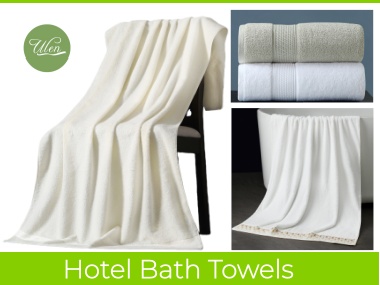
1. Bath Towels: The Primary Guest Touchpoint
Towels are the most used and judged item in the bathroom. Allocate your budget here with precision.
-
INVEST In:
-
Fabric Quality & GSM: This is your top investment. Prioritize high-quality combed cotton or a durable cotton-polyester blend with a GSM of 500-600. This ensures superior absorbency, a substantial feel, and longevity. A great towel makes an immediate positive impression.
-
Safety Certification: OEKO-TEX Standard 100 is non-negotiable. Investing in certified safety protects your guests and your brand.
-
-
SAVE On:
-
Decorative Details: Opt for cost-effective embroidered logos or printed labels instead of expensive woven jacquard borders. Choose standard, versatile colors over custom dyes for bulk orders.
-
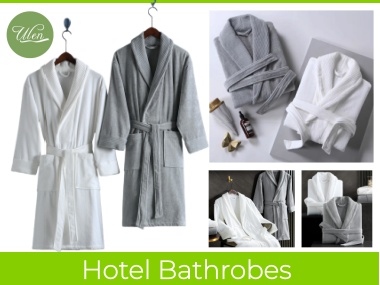
2. Bathrobes: Balancing Luxury and Function
Robes signal indulgence but vary greatly in use case (in-room vs. spa).
-
INVEST In:
-
Fabric Hand-Feel & Construction: Invest in the primary fabric that guests feel (e.g., plush terry, soft microfiber) and in reinforced stitching at high-stress points (shoulders, armholes, belt loops). Durability here prevents premature replacement.
-
Fit: Ensure a comfortable, generous cut that fits a range of body types—a poorly fitting robe feels cheap regardless of fabric.
-
-
SAVE On:
-
Design Complexity: Save on elaborate collars, contrasting piping, or oversized shawl collars. A classic, well-proportioned design is both elegant and cost-effective. For in-room robes, a simple tie belt is sufficient versus a more expensive wrap-and-belt style.
-
3. Bath Mats: Prioritizing Safety Above All
The primary function is safety, followed by absorbency.
-
INVEST In:
-
The Non-Slip Backing: This is your most critical investment. Choose a mat with a high-quality, full-coverage, thermally bonded latex (or eco-alternative) backing. A failing backing is a safety hazard and makes the mat useless, regardless of how plush the top is.
-
-
SAVE On:
-
Pile Height & Size: A medium-pile cotton mat is often perfectly adequate, dries faster, and costs less than an ultra-plush version. Stick to standard rectangular sizes instead of custom shapes.
-
Cross-Category Budget Optimization Strategies
-
Adopt a Tiered Quality Strategy: You don’t need the same robe everywhere. Use a premium robe in suites and a very good, but more cost-effective, performance-blend robe in standard rooms. Apply the same logic to pool towels (tough, quick-dry) vs. bath towels (plush).
-
Radical Standardization: Reduce SKUs dramatically. Use one type of towel for all guest rooms. This maximizes bulk purchase discounts and simplifies inventory management, creating significant hidden savings.
-
Calculate Cost-Per-Use (CPU): Before deciding, calculate:
Item Cost ÷ Expected Laundry Cycles = CPU. A more expensive, longer-lasting item often has a lower CPU, making it the smarter investment. Use this data to justify upfront spending on quality. -
Partner with a Vertical Manufacturer: Suppliers who control production from yarn to finished product often offer better value, combining transparent pricing with consistent quality, as they eliminate middleman markups.
The Non-Negotiables: What You Should Never Cut From the Budget
Regardless of savings strategies, these are essential:
-
Commercial Laundry Resilience: All items must withstand industrial washing.
-
Operational Practicality: Linens must be easy for housekeeping to handle, fold, and replenish.
-
Professional Finish: No item should have loose threads or poor stitching.
Conclusion: An Intelligent Budget is a Competitive Advantage
Effective budgeting for bath linens is not about spending less—it’s about spending smarter. By deliberately directing funds toward durability, safety, and key guest touchpoints, you build a bath linen program that elevates the guest experience while optimizing your total cost of ownership. This strategic approach turns procurement from a cost center into a tool for enhancing value and reputation.
Need Help Creating a Value-Optimized Bath Linen Budget?
We specialize in helping hotels develop strategic linen programs that balance smart investment with efficient savings. Our product tiers are designed to align with this “invest vs. save” framework.
Contact us for a Custom Bath Linen Budget Analysis. We’ll review your current spending and provide a tailored plan to help you allocate your budget for maximum guest impact and ROI.