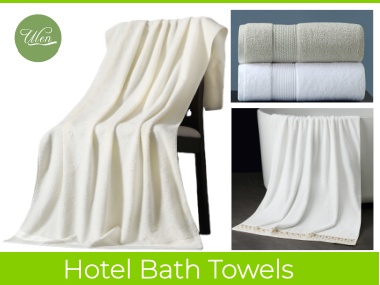
Purchasing bath towels for a hotel involves far more than selecting a color and feeling for softness. In a commercial setting, towels are assets that undergo extreme stress. Choosing based on aesthetics alone leads to rapid degradation, guest complaints, and a high cost-per-use.
This guide provides hotel procurement managers with the technical knowledge needed to make informed investments. We break down the three critical, measurable factors that determine a towel’s performance and value in hospitality: GSM (weight), Weave (construction), and Commercial Laundry Resilience. Master these, and you’ll buy towels that balance luxury with longevity.
Part 1: Why Specs Matter More Than “Softness”
A towel’s initial hand-feel is often created by chemical softeners that wash out after a few industrial cycles. True, lasting quality is engineered into its physical structure. Focusing on specifications prevents you from buying a towel that feels great on day one but becomes thin, rough, and abrasive after 50 washes. Your goal is a low cost-per-use, achieved by maximizing the number of quality washes per towel.
Part 2: Decoding the Three Pillars of Towel Quality
1. GSM: The Objective Measure of Substance and Absorbency
GSM stands for Grams per Square Meter. It is the single most important indicator of a towel’s weight, density, and overall substance.
-
What it Means: Higher GSM = more cotton per square meter = a heavier, thicker, more absorbent towel.
-
Commercial Recommendations:
-
500-600 GSM: The industry sweet spot. Offers excellent absorbency, a substantial feel, and reasonable drying times. Ideal for standard guest rooms.
-
400-500 GSM: A good mid-range option for budget-conscious properties or poolside use, where quicker drying is beneficial.
-
600+ GSM: Very plush and luxurious, but dries slowly, increasing laundry costs and turnover time. Best reserved for high-end suites or spas.
-
-
Key Insight: Don’t be fooled by “lightweight luxury.” A towel under 400 GSM will lack the density to withstand commercial laundering and will wear out quickly.
2. Weave & Construction: The Foundation of Feel and Durability
The weave determines the towel’s texture, absorbency, and aesthetic.
-
Terry Cotton: The classic. Loops of thread (pile) are woven to create a soft, absorbent surface.
-
Standard Terry: Reliable and cost-effective.
-
Jacquard Terry: Features woven patterns or hotel logos for a branded, upscale look without added embroidery.
-
-
Fabric Quality: Within terry, seek combed cotton. The combing process removes short, weak fibers, resulting in stronger yarns that are more absorbent, softer, and less prone to pilling.
-
Hem & Stitching: Inspect the edges. Double-turned hems (fabric folded twice and stitched) prevent fraying. Stitching should be straight and secure.
3. Commercial Laundry Tests: The Ultimate Proof of Performance
This is where supplier promises meet reality. Towels must survive 150+ industrial wash cycles.
-
Tests to Ask For:
-
Tensile Strength (ASTM D5034): Measures the force required to tear the fabric. Ensures the towel won’t rip under stress.
-
Colorfastness (AATCC 61): Tests resistance to fading from washing, bleaching, and chlorinated pool water.
-
Pilling Resistance (ASTM D4970): Evaluates the formation of small fiber balls on the surface. Poor performance here makes towels look old quickly.
-
-
The Non-Negotiable “Live Test”: Always request a pre-laundered sample. Wash and dry it 10-15 times in conditions mimicking your own laundry. Then evaluate:
-
Has it lost significant weight or thickness?
-
Does it still absorb water quickly?
-
Is there noticeable pilling or fading?
-
Does the hem remain intact?
-
Part 3: The Hotelier’s Towel Procurement Checklist
Use this actionable list when evaluating suppliers and products:
-
Define Your Standard: Target 550 GSM, combed cotton terry as a starting benchmark.
-
Request Documentation: Ask for GSM certification, OEKO-TEX Standard 100 certificate (for chemical safety), and lab test reports for pilling and tensile strength.
-
Get Physical: Feel the towel’s density. Examine the stitching on the hem.
-
Perform Your Own Due Diligence: Insist on a washed sample. Conduct your own absorbency and visual inspection test post-laundering.
-
Calculate True Cost: Use the formula: Cost-Per-Use = Towel Price / Expected Number of Wash Cycles. A $8 towel that lasts 80 cycles costs $0.10 per use. A $12 towel that lasts 200 cycles costs $0.06 per use—a 40% savings.
Part 4: Common Pitfalls to Avoid
-
Pitfall 1: Prioritizing a high thread count. Thread count is irrelevant for terry towels; GSM is the key metric.
-
Pitfall 2: Choosing 100% cotton without specifying “combed.” Uncombed cotton is inferior.
-
Pitfall 3: Selecting towels based solely on the virgin, unwashed feel in a showroom.
-
Pitfall 4: Not verifying the safety standard (OEKO-TEX) for guest health and your liability.
Conclusion: Investing in Performance, Not Just Cotton
Buying hotel bath towels is an exercise in forensic procurement. By focusing on verifiable GSM, robust construction, and proven laundry resilience, you shift from buying a disposable commodity to investing in a durable asset. This data-driven approach ensures your towels deliver guest satisfaction for hundreds of cycles, directly translating to a lower total cost of ownership and a stronger bottom line.
Ready to Test Towels Engineered for Hospitality?
Our commercial bath towels are developed specifically against these rigorous criteria. We provide full technical specifications, independent test data, and pre-washed samples so you can verify performance before you buy.
Contact us to request our Commercial Towel Performance Kit, complete with a washed sample and our detailed specification guide. See and feel the difference that professional engineering makes.