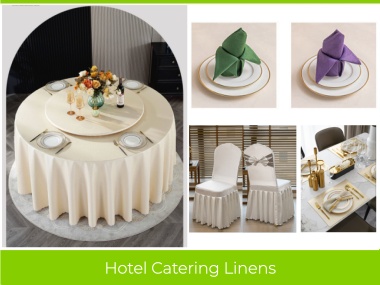
For hotel procurement managers, chair covers represent a unique challenge: they must protect valuable seating assets, enhance event aesthetics, and withstand the rigors of industrial laundering—all while delivering measurable return on investment. Unlike residential textiles, commercial-grade chair covers face constant movement, guest contact, and frequent washing cycles that would quickly destroy inferior products.
This guide provides a data-driven framework for evaluating hotel chair covers, helping you make informed decisions that satisfy both your finance team and your event clients.
Why Chair Covers Deserve Strategic Attention
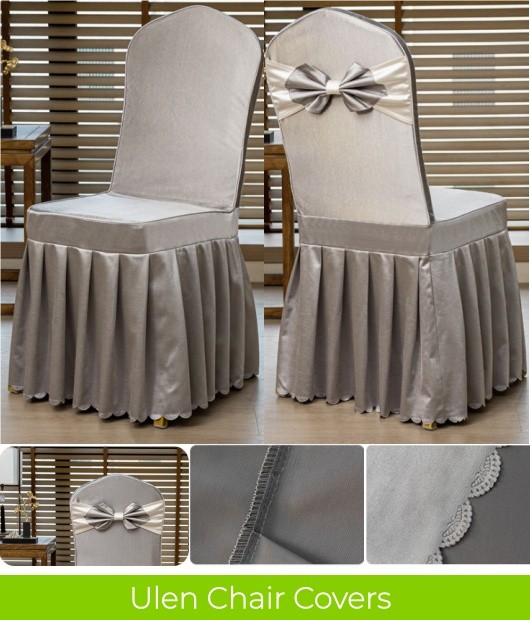
Chair covers may appear as decorative accessories, but their impact on operations and brand perception is substantial. A hotel with multiple banquet halls, conference rooms, and dining venues may put thousands of chair covers through industrial laundry each month. The wrong choice means:
-
Accelerated replacement cycles due to elastic fatigue, seam failure, or fabric degradation
-
Increased labor costs from constant readjustment, ironing, or stain treatment
-
Inconsistent event presentation when covers appear worn, mismatched, or ill-fitting
-
Brand dilution when seating detracts from an otherwise beautifully appointed room
Conversely, well-chosen chair covers reduce total cost of ownership, streamline laundry operations, and reinforce your property’s commitment to quality.
Material Matters: Understanding Fabric Options
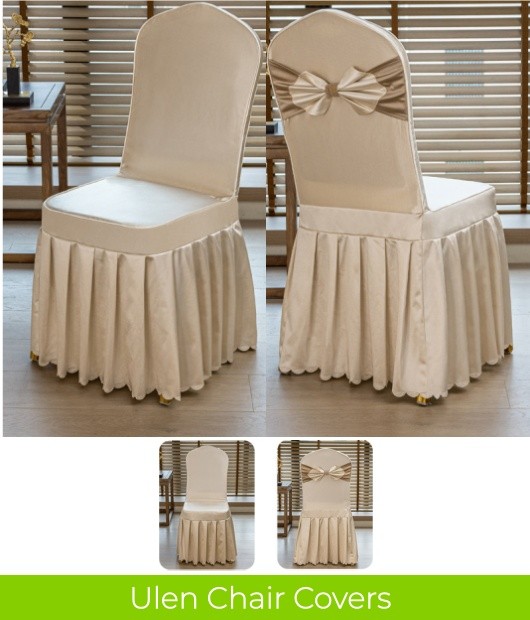
The foundation of any chair cover decision is material selection. Each option presents distinct trade-offs that procurement managers must weigh against their property’s specific needs.
Spandex-Polyester Blends
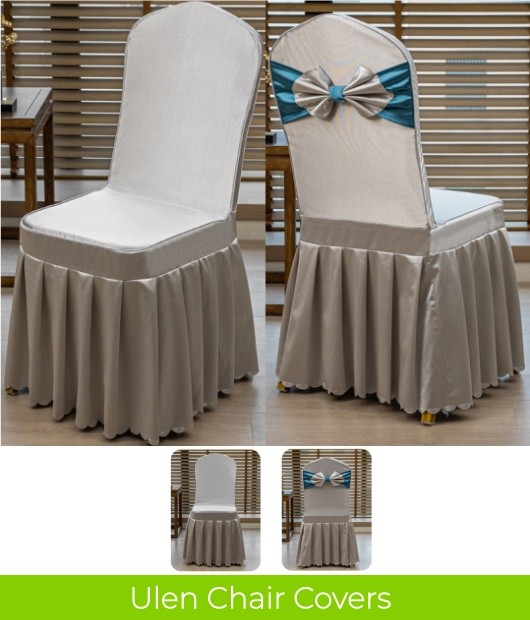
Spandex-polyester blends (typically 80-90% polyester, 10-20% spandex) have become the industry standard for banquet and event chair covers—and for good reason. The 4-way stretch technology ensures a wrinkle-free, tailored appearance without sagging or shifting, even during extended events where guests frequently sit and rise.
Advantages:
-
Superior elasticity with recovery rates exceeding 90% after stretching
-
Accommodates 10-15% size variation, ideal for venues with mixed chair inventories
-
Snug fit that conforms to banquet, Chiavari, folding, and armchair styles
-
Wrinkle-resistant construction eliminates ironing requirements
-
Quick-drying properties reduce energy costs and accelerate turnaround
Considerations:
-
May not convey the same luxury perception as velvet or satin for high-end events
-
Quality varies significantly between suppliers; request stretch recovery test data
For most hotel applications—banquets, conferences, and multi-purpose event spaces—spandex-polyester blends offer the optimal balance of fit consistency and operational efficiency.
Polyester and Spun Polyester
Standard polyester offers durability and wrinkle resistance at economical price points, making it suitable for high-turnover operations where covers are replaced frequently . Spun polyester, which undergoes mechanical softening, provides a cotton-like feel without sacrificing durability.
Advantages of Spun Polyester:
-
Softer hand feel than standard polyester
-
Excellent color retention through repeated washing
-
Holds intricate folds and decorative elements
-
Withstands 300+ industrial wash cycles at lowest cost-per-use
Specialty Fabrics: Satin, Velvet, and Linen
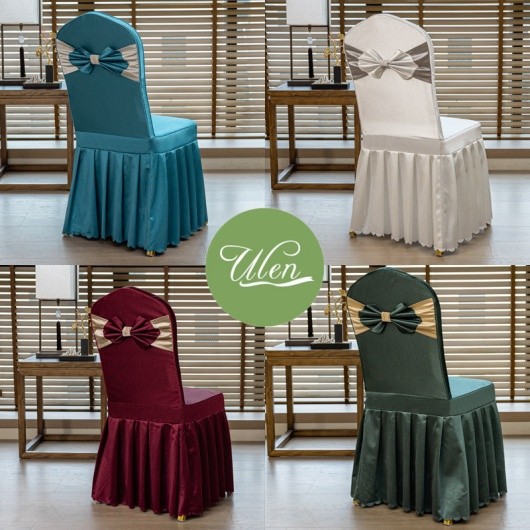
For upscale events and fine dining venues, specialty fabrics elevate the visual experience. Satin offers a smooth, glossy finish that adds luxury to weddings and galas, though it requires careful handling to avoid stains and damage . Velvet provides rich texture ideal for VIP lounges and winter events. Linen delivers natural elegance but demands more maintenance due to its tendency to crease .
Key Technical Specifications for Commercial Use
Beyond material composition, procurement managers should evaluate several technical parameters that predict real-world performance.
Elasticity and Recovery
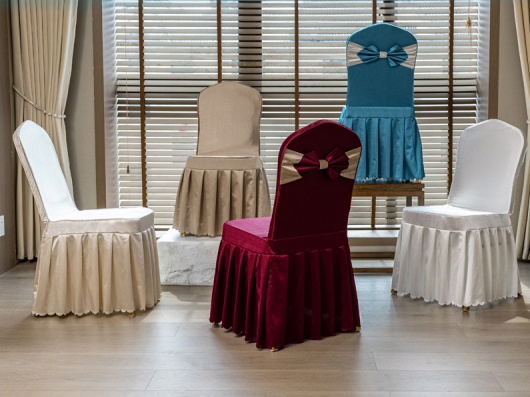
For stretch covers, elasticity determines both fit quality and longevity. Premium covers maintain at least 90% recovery after 100 stretch cycles, ensuring they return to original dimensions after each use . Inferior covers gradually bag or loosen, requiring constant readjustment and premature replacement.
Abrasion Resistance
Commercial chair covers must withstand friction from constant movement, guest contact, and stacking. Martindale rub test scores provide objective benchmarks:
-
Standard commercial use: 15,000-25,000 cycles
-
High-turnover venues: 30,000-50,000 cycles
-
Premium durability: 45,000+ cycles
Colorfastness Ratings
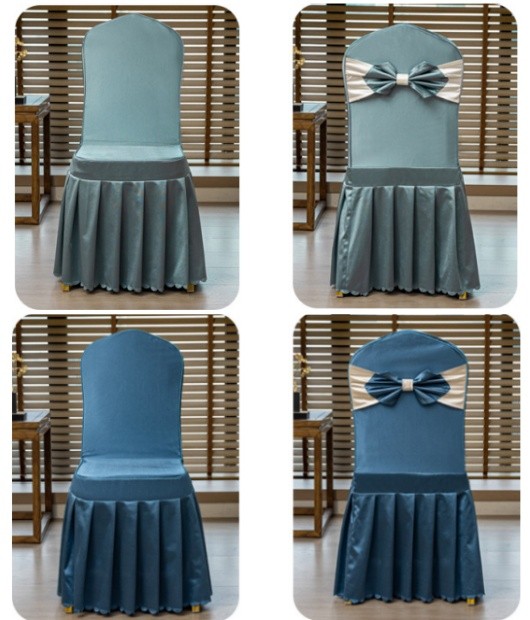
Chair covers endure frequent high-temperature washing with aggressive detergents and occasional bleach. Look for colorfastness ratings of Grade 4-5 (on the Grey Scale), indicating minimal fading after repeated laundering . Reactive dyes, which bond chemically with fibers, outperform pigment dyes that merely coat the surface.
Seam and Edge Construction
Examine stitching quality—reinforced seams with overlock or double-needle construction resist fraying far longer than basic single-needle hems. This seemingly minor detail significantly impacts lifespan, particularly for covers that undergo frequent installation and removal.
Functional Features for Operational Efficiency
Elastic-Back vs. Full Coverage
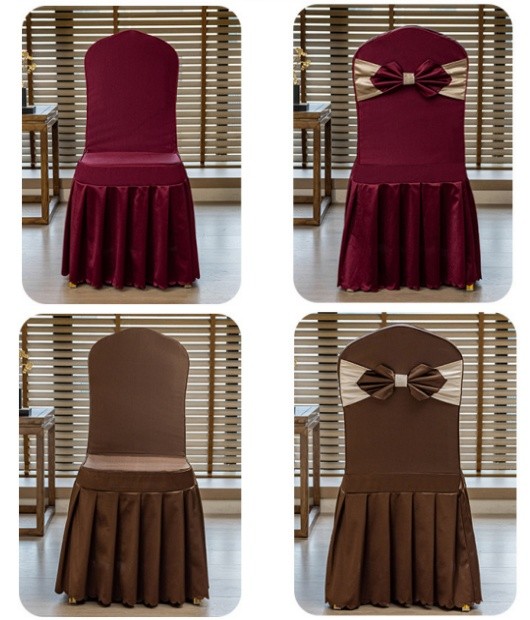
Elastic-back covers offer quick installation and universal fit, making them ideal for high-turnover banquet operations. Full-coverage designs with zippers or ties provide a more custom appearance but require more labor to install .
Quick-Drying and Wrinkle-Resistant Properties
Covers that emerge from the dryer ready to use eliminate ironing labor and accelerate event turnaround. This feature becomes increasingly valuable during peak seasons when laundry rooms run continuously to keep up with back-to-back event schedules.
Stain-Resistant Treatments
Advanced fabric treatments repel common banquet spills—red wine, coffee, oil, and sauces—preventing liquids from penetrating fibers and allowing staff to quickly blot away messes before they set. This protection reduces the need for pre-treatment or aggressive scrubbing during laundering .
Safety and Compliance Considerations
For public assembly spaces, flame resistance is non-negotiable. Inherent flame-retardant polyester, where FR protection is woven directly into the fiber structure, offers permanent safety that never washes out or degrades . This differs from chemically treated fabrics that gradually lose effectiveness through repeated laundering.
Key international standards to verify:
-
BS 5852 (UK/Ireland)
-
NFPA 701 (US/International)
-
CAL 117 (California Technical Bulletin)
Request third-party test reports confirming compliance with relevant codes for your market .
Calculating True Cost-Per-Use
Procurement decisions based solely on unit price often lead to higher long-term costs. Instead, calculate cost-per-use:
Cost-Per-Use = (Purchase Price) / (Expected Wash Cycles)
Industry benchmarks suggest:
-
Economy-grade covers: 50-100 wash cycles
-
Standard commercial covers: 150-250 wash cycles
-
Premium engineered covers: 500+ wash cycles
A $6 economy cover lasting 75 cycles costs $0.080 per use. A $12 premium cover lasting 500 cycles costs $0.024 per use—a 70% reduction in cost-per-use despite double the upfront investment.
Factor in labor savings from reduced ironing, fewer adjustments, and lower replacement frequency, and the ROI case for durable, well-engineered covers becomes compelling.
Inventory Planning: The Par Level Formula
Proper inventory levels prevent service disruptions while minimizing capital tied up in linen storage. The standard formula:
(Seat Count × Daily Turns × Par Level) + Buffer = Total Covers Needed
Where:
-
Daily Turns = Number of events or meal periods per day
-
Par Level = 2-3 (one set in use, one in laundry, one in storage)
-
Buffer = 15-20% for unexpected events, stains, or delays
For a 500-seat banquet hall with 1.5 turns daily and a 3-par system:
500 × 1.5 × 3 = 2,250 covers + 450 buffer = 2,700 covers total
Customization and Brand Integration
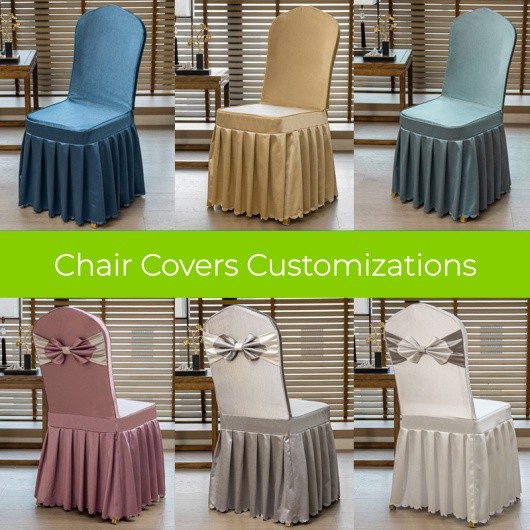
Many hotels use chair covers as brand touchpoints through custom colors and logo integration. When pursuing customization:
-
Pantone color matching ensures visual consistency with brand guidelines
-
Embroidered logos or woven crests transform standard seating into brand ambassadors
-
Digital printed patterns offer limitless creative possibilities for themed events
For properties with unique or antique seating, custom sizing ensures flawless fit that standard covers cannot accommodate—eliminating the sloppy appearance of excess fabric or exposed chair backs.
Frequently Asked Questions for Procurement Managers
Q: How do I determine the right fit for mixed chair inventories?
Measure representative samples of each chair type—back height, seat width, depth, and armrest configuration. Look for spandex blends with 10-15% size accommodation range that can span multiple chair styles within your inventory .
Q: What is the typical lead time for custom orders?
Standard production: 15-25 days. Custom colors or embroidery add 7-10 days. Air freight delivers in 5-7 days internationally; sea freight takes 25-40 days .
Q: How do I verify flame resistance claims?
Request third-party test reports from accredited laboratories confirming compliance with relevant standards (BS 5852, NFPA 701, CAL 117). For inherent FR fabrics, confirm that protection is fiber-integrated rather than topical.
Q: Can I get samples before committing to bulk orders?
Most quality suppliers offer samples for $5-20 per unit, often refundable against future orders. Always confirm who covers express shipping costs .
Q: What warranty terms are reasonable to expect?
Expect 1-2 year warranties against manufacturing defects. Premium suppliers may offer extended coverage for seams, elastic recovery, and colorfastness .
Making the Final Decision
The right hotel chair cover balances three sometimes-competing priorities:
-
Guest experience: Appearance, comfort, and fit consistency
-
Operational efficiency: Easy installation, minimal maintenance, quick laundering
-
Financial performance: Competitive cost-per-use and extended lifespan
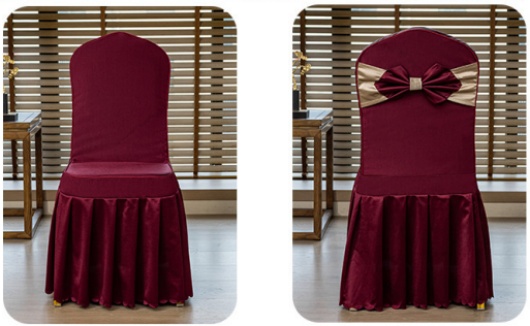
For most properties, high-quality spandex-polyester blends deliver the optimal mix of these factors—providing wrinkle-free presentation, universal fit, and durability through 500+ wash cycles. Venues with specialized needs may opt for velvet for VIP events, satin for weddings, or inherent FR fabrics for strict compliance requirements.
Whichever path you choose, rigorous supplier evaluation, sample testing, and lifecycle cost analysis will ensure your chair cover investment supports both guest satisfaction and your bottom line—event after event, wash after wash.