For hotel procurement managers, tablecloths represent far more than simple fabric covers. They are foundational elements of your property’s visual identity, guest experience, and operational efficiency. A single banquet hall may put thousands of tablecloths through industrial laundry each year—making material selection, durability assessment, and supplier evaluation critical financial decisions.
This guide provides a data-driven framework for evaluating hotel tablecloths, helping you make informed choices that satisfy both your finance team and your discerning clientele.
Why Tablecloths Deserve Strategic Attention
The global table linen market is projected to reach USD 3.21 billion by 2033, growing at a CAGR of 5.2% . This growth reflects the resurgent hospitality sector and the increasing importance of experiential dining. For procurement professionals, the wrong tablecloth choice means:
-
Accelerated replacement cycles due to fraying, fading, or shrinkage
-
Increased labor costs from ironing and stain pre-treatment
-
Inconsistent guest experiences when linens look worn or mismatched
-
Brand dilution when table presentation fails to meet expectations
Conversely, well-chosen tablecloths reduce total cost of ownership, streamline laundry operations, and reinforce your property’s commitment to quality.
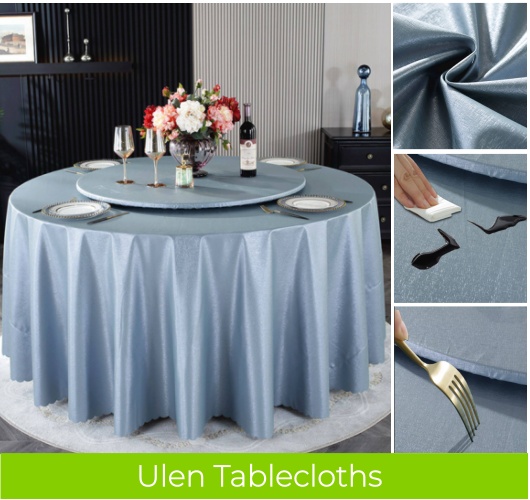
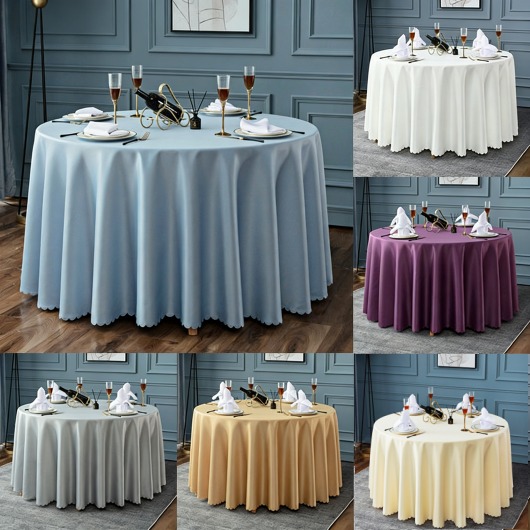
Material Matters: Understanding Fabric Options
The foundation of any tablecloth decision is material selection. Each option presents distinct trade-offs that procurement managers must weigh against their property’s specific needs.
100% Cotton Tablecloths
Cotton tablecloths represent the traditional standard for luxury dining. Made entirely from natural fibers, they offer exceptional softness and a timeless aesthetic that guests immediately notice . Their natural drape and subtle texture create warmth and authenticity in upscale settings.
Advantages:
-
Superior softness and guest comfort
-
Rich, organic color depth with natural matte finish
-
Biodegradable and renewable material
-
Develops character over time, appealing to fine dining establishments
Considerations:
-
Prone to wrinkling, requiring ironing after each wash
-
High absorbency means quick stain penetration—red wine and oil can set permanently if not treated immediately
-
Shrinkage of 5–10% if not pre-shrunk or washed improperly
-
Shorter lifespan: typically 2–4 years with regular use
-
Higher cost-per-unit and labor requirements
For luxury properties where guest experience trumps all other considerations, 100% cotton remains the gold standard—but procurement managers must budget for higher replacement frequency and labor costs.
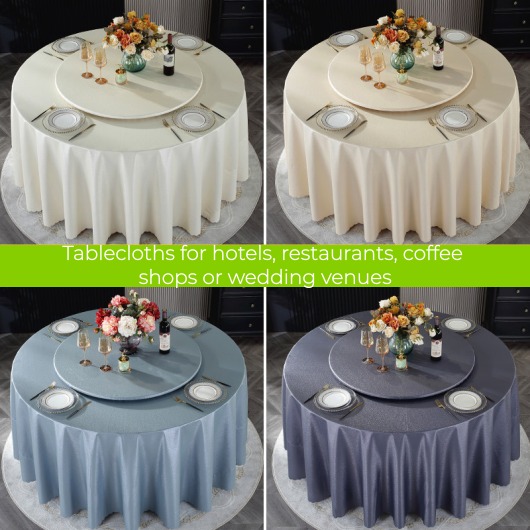
100% Polyester Tablecloths
Polyester tablecloths have become the workhorse of the hospitality industry, and for good reason. Modern spun polyester offers a cotton-like softness while delivering exceptional durability .
Advantages:
-
Excellent stain resistance—liquids bead up rather than penetrating immediately, providing a cleanup window
-
Wrinkle-resistant construction emerges from dryer ready to use, eliminating ironing labor
-
Withstands 300+ industrial wash cycles with minimal degradation
-
Colorfastness: resists fading from UV exposure and repeated laundering
-
Negligible shrinkage after washing
-
Lower cost-per-use despite comparable or slightly higher upfront investment
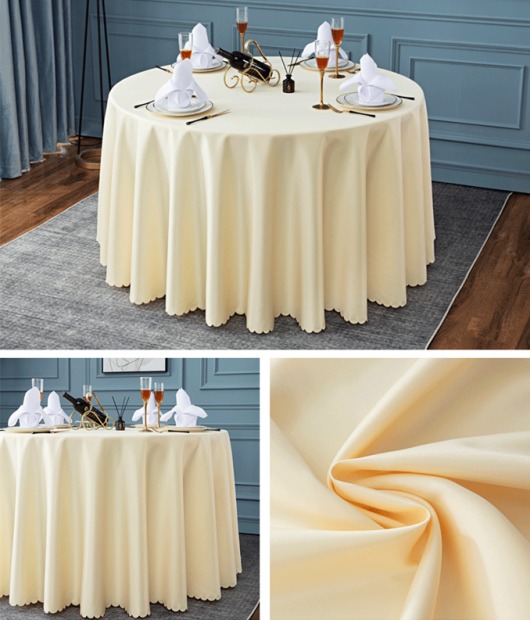
Considerations:
-
Synthetic feel, though high-quality spun polyester closely mimics natural fibers
-
Can melt under high heat (candles, hot serving trays)
-
Non-biodegradable; contributes to microplastic pollution during washing
For banquet halls, conference centers, and high-volume restaurants, polyester tablecloths deliver outstanding value with minimal maintenance requirements.
Cotton-Polyester Blend Tablecloths
Blended fabrics—typically 50/50 or 60/40 cotton-polyester—offer a compelling middle ground, combining the softness of cotton with the durability of polyester .
Advantages:
-
Enhanced wrinkle resistance compared to pure cotton
-
Better stain resistance than cotton, though not as protective as pure polyester
-
Softer hand feel than 100% polyester
-
Reduced shrinkage compared to cotton
-
Balanced cost-performance ratio
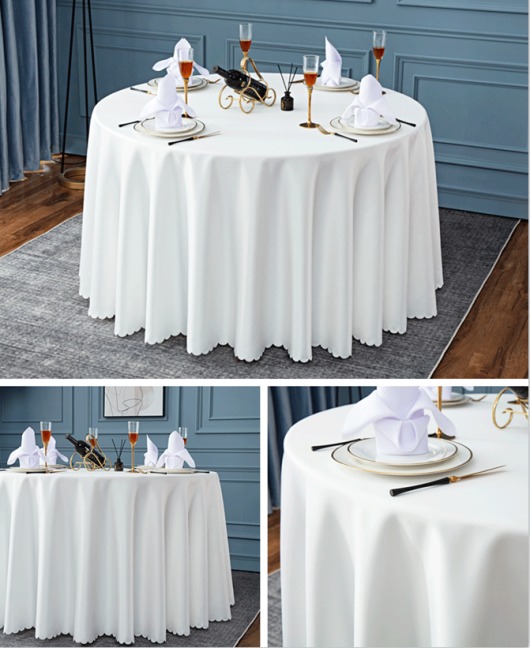
Considerations:
-
Uneven staining patterns possible—cotton absorbs while polyester repels, creating differential cleaning challenges
-
Requires more careful laundering than pure polyester
-
Moderate heat tolerance
For hotel restaurants and dining rooms seeking a balance of elegance and practicality, cotton-polyester blends represent an intelligent compromise.
Specialty Materials
Linen tablecloths offer unparalleled luxury and natural luster, ideal for fine dining and VIP events. However, they require meticulous care, wrinkle easily, and command premium pricing . Vinyl tablecloths provide waterproof durability for outdoor dining and casual buffets, though they lack the elegance required for upscale settings.
Key Technical Specifications for Commercial Use
Beyond material composition, procurement managers should evaluate several technical parameters that predict real-world performance.
Fabric Weight and Thread Count
Fabric weight, measured in GSM (grams per square meter), directly impacts durability and drape. Commercial-grade tablecloths typically range from 180–250 GSM. Higher GSM indicates denser, more durable fabric that resists wear and maintains appearance through repeated laundering .
For cotton and blends, thread count matters—look for 200 TC and above for optimal softness and durability.
Colorfastness Ratings
Tablecloths endure frequent high-temperature washing with aggressive detergents and occasional bleach. Look for colorfastness ratings of Grade 4-5 (on the Grey Scale), indicating minimal fading after repeated laundering . Reactive dyes, which bond chemically with fibers, outperform pigment dyes that merely coat the surface.
Stain Resistance and Fabric Treatments
Advanced fabric treatments can significantly enhance performance. Look for:
-
Stain-release finishes that prevent deep penetration of wine, coffee, oil, and sauces
-
Water-repellent coatings for outdoor or high-spill environments
-
Flame-retardant treatments where required by local codes (confirm NFPA 701, CAL 117, or BS 5852 compliance)
Note that some topical treatments degrade after repeated washing. Inherent FR polyester, where flame resistance is woven into the fiber structure, offers permanent protection .
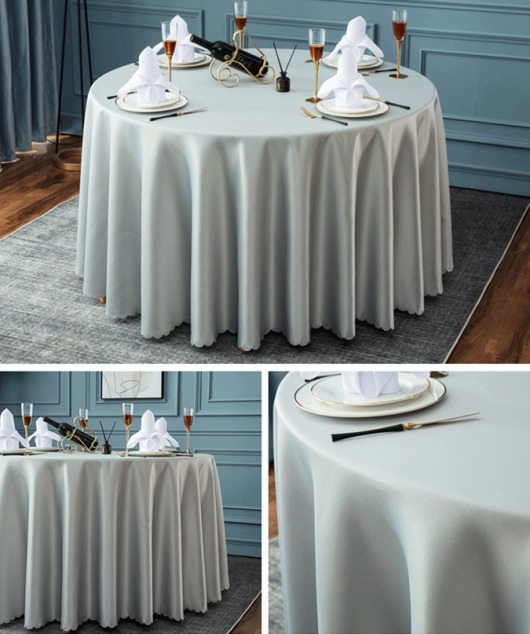
Seam and Edge Construction
Examine hemming quality—double-stitched or reinforced borders resist fraying far longer than basic single-needle hems . This seemingly minor detail significantly impacts lifespan, particularly for tablecloths that undergo frequent laundering and handling.
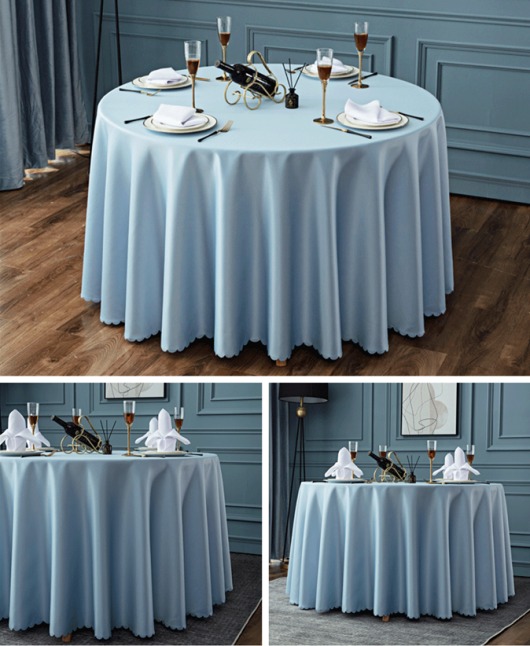
Sizing and Drop Length Considerations
Proper fit is essential for professional presentation. Standard drop lengths range from 6–15 inches for casual dining to 15–30 inches for formal banquet settings .
Standard sizes for common tables:
-
6-foot rectangular tables: 90″ × 132″ (full drop)
-
8-foot rectangular tables: 90″ × 156″ (full drop)
-
60″ round tables: 90″ round (15″ drop) or 120″ round (30″ floor-length drop)
For venues with unique or antique tables, custom sizing ensures flawless fit that standard covers cannot accommodate .
Calculating True Cost-Per-Use
Procurement decisions based solely on unit price often lead to higher long-term costs. Instead, calculate cost-per-use:
Cost-Per-Use = (Purchase Price) / (Expected Wash Cycles)
Industry benchmarks suggest:
-
Economy-grade cotton: 75–150 wash cycles
-
Standard cotton: 150–200 wash cycles
-
Cotton-polyester blends: 200–300 wash cycles
-
Premium polyester: 300–500+ wash cycles
A $10 cotton tablecloth lasting 150 cycles costs $0.067 per use. A $12 premium polyester tablecloth lasting 400 cycles costs $0.030 per use—a 55% reduction in cost-per-use despite higher upfront investment.
Factor in labor savings from reduced ironing (polyester eliminates this entirely) and lower water/energy consumption from faster drying cycles, and the ROI case for durable, easy-care tablecloths becomes compelling.
Inventory Planning: The Par Level Formula
Proper inventory levels prevent service disruptions while minimizing capital tied up in linen storage. The standard formula:
(Seat Count × Daily Turns × Par Level) + Buffer = Total Tablecloths Needed
Where:
-
Daily Turns = Number of meal periods or events per day
-
Par Level = 2–3 (one set in use, one in laundry, one in storage)
-
Buffer = 15–20% for unexpected events, stains, or delays
For a 200-seat banquet hall with 1.5 turns daily and a 3-par system:
200 × 1.5 × 3 = 900 tablecloths + 180 buffer = 1,080 tablecloths total
Sustainability Considerations
Environmental impact increasingly influences procurement decisions. Options to consider:
-
100% cotton tablecloths: Biodegradable but shorter lifespan means more frequent replacement
-
Recycled polyester (rPET): Reduced petroleum footprint while maintaining durability
-
Organic cotton: GOTS-certified options appeal to eco-conscious properties
-
Longer-life products: The most sustainable tablecloth is one that doesn’t need frequent replacement
Note that conventional cotton farming is water-intensive (up to 20,000 liters per kilogram) and often relies on pesticides . Polyester’s longevity must be weighed against its petroleum-based origin and microplastic shedding during washing.
Frequently Asked Questions for Procurement Managers
Q: What fabric is best for high-turnover banquet operations?
Polyester or high-quality polyester blends dominate due to wrinkle resistance, stain protection, and durability through 300+ wash cycles. They eliminate ironing labor and accelerate event turnaround .
Q: How do I verify a supplier’s reliability before ordering?
Cross-check performance metrics including on-time delivery (>97%), response time (<3 hours), and third-party review scores. Request ISO or OEKO-TEX certifications and consider third-party factory audits .
Q: What is a reasonable MOQ for custom tablecloths?
MOQs vary widely: stock designs may require 10–50 pieces; custom colors or embroidery typically demand 50–100 units. Some suppliers offer single-piece sampling for design validation .
Q: How long does production take?
Standard production: 15–25 days after sample approval. Custom colors or embroidery add 7–10 days. Air freight delivers samples in 5–10 days; sea freight for bulk orders takes 25–40 days .
Q: Can I get samples before committing to bulk orders?
Most quality suppliers offer samples for $5–20 per unit, often refundable against future orders. Always confirm who covers express shipping costs .
Q: How do I ensure color consistency across batches?
Request Pantone matching and establish a reference sample signed off by both parties. Prioritize suppliers with in-house dyeing capabilities and color consistency certifications.
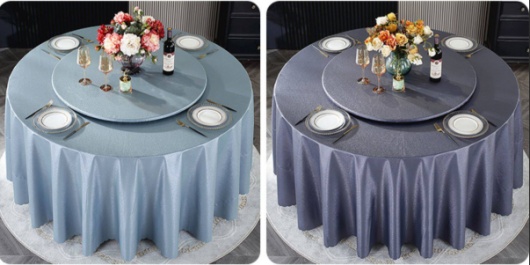
Making the Final Decision
The right hotel tablecloth balances three sometimes-competing priorities:
-
Guest experience: Softness, drape, and visual appeal
-
Operational efficiency: Easy laundering, minimal ironing, quick drying
-
Financial performance: Competitive cost-per-use and extended lifespan
For most properties, high-quality polyester or cotton-polyester blends deliver the optimal mix of these factors—providing stain resistance, wrinkle-free presentation, and durability through hundreds of wash cycles. Luxury venues with fine dining operations may justify 100% cotton for its unmatched natural feel, accepting higher maintenance costs. Properties emphasizing sustainability might prioritize organic cotton or recycled polyester options.
Whichever path you choose, rigorous supplier evaluation, sample testing, and lifecycle cost analysis will ensure your tablecloth investment supports both guest satisfaction and your bottom line—meal after meal, wash after wash.