Facing rising operational costs, The Orchard Inn, a 50-room boutique hotel, needed to find savings without compromising their reputation for quality. Their linen budget was a prime target. Within one year, they achieved a 20% reduction in total annual linen expenditure.
This case study breaks down their precise, four-step strategy, providing a actionable blueprint for other hoteliers.
The Challenge: High Costs & Inconsistent Quality
The Orchard Inn’s General Manager identified three core problems:
-
Frequent Towel Replacement: Bath towels were wearing out quickly, becoming thin and rough after just 8-12 months.
-
High Laundry Costs: Laundry invoices were consistently over budget.
-
Guest Complaints: An increase in comments about “scratchy” towels and “worn” sheets.
Their previous procurement was based on finding the lowest unit price, not long-term value.
The 4-Step Strategy for Sustainable Savings
Step 1: Conduct a Total Cost of Ownership (TCO) Audit
Instead of just looking at invoice price, the team calculated the Cost-Per-Use (CPU) for their primary items. Using a simple spreadsheet (like the one from our previous guide), they factored in:
-
Purchase Price
-
Observed Lifespan (in washes)
-
Commercial Laundry Cost per Kg
Discovery: Their “cheap” 450 GSM towels had a higher CPU ($0.32) than a quoted 600 GSM towel from a premium supplier ($0.28), due to a much shorter lifespan.
Step 2: Implement Rigorous Supplier & Product Testing
Armed with TCO data, they issued a new RFP focused on durability. Using a supplier vetting checklist, they:
-
Requested Lab Reports: For shrinkage and tensile strength after 100+ washes.
-
Ran a Live Laundry Trial: They tested three short-listed towel samples over 50 commercial wash cycles in their own on-premise laundry.
-
Negotiated on Value, Not Just Price: They presented the CPU analysis to suppliers, negotiating based on proven longevity and lower long-term cost.
Step 3: Optimize GSM & Inventory Mix
Based on trial results, they made a strategic shift:
-
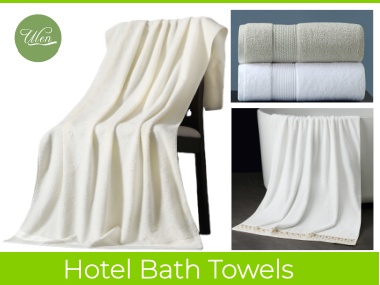
Upgraded Bath Towels: They switched from a 450 GSM to a denser, long-staple 600 GSM towel. The higher initial cost was offset by a 40% longer projected lifespan, reducing replacement frequency and improving guest feel.
-
Right-Sized Pool Inventory: By analyzing occupancy and laundry turnaround, they optimized their par stock levels, reducing the capital tied up in idle linen by 15%.
Step 4: Partner with Laundry for Care & Training
They realized linen care was as important as the linen itself.
-
Reviewed Chemical Dosage: Worked with their chemical supplier to ensure proper dosing—too much bleach was degrading fibers prematurely.
-
Staff Training: Briefed laundry staff on proper loading weights and cycles to prevent mechanical damage.
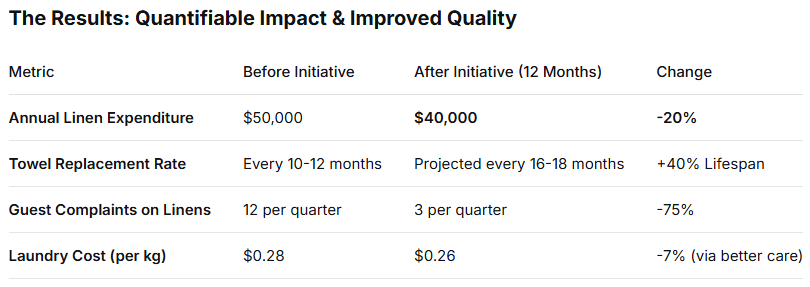
Additional Benefits: The new, higher-quality linens elevated the perceived room value, contributing to a 0.2-point increase in their “Room Quality” score on review platforms.
Key Takeaways for Your Hotel
-
Price is a Snapshot, Cost-Per-Use is the Movie. The cheapest item is often the most expensive in the long run.
-
Test Relentlessly. Never buy based on a sample that hasn’t survived your own commercial laundry cycle.
-
Your Laundry is a Partner. Linen longevity is a joint effort between procurement and laundry operations.
-
Invest in Quality for High-Touch Items. Upgrading key items like bath towels has the highest ROI in both cost savings and guest satisfaction.
Conclusion: A Repeatable Framework
The Orchard Inn’s success was not magic. It resulted from a disciplined shift to data-driven procurement. By focusing on Total Cost of Ownership, insisting on verifiable durability testing, and fostering cross-departmental collaboration, they turned a cost center into a story of improved quality and significant savings.
Your Action Plan: Start with a CPU audit of your 3 most-replaced linen items. The results will immediately point you toward your greatest opportunity for savings.