
For hoteliers, the bathroom is a critical sanctuary. The linens within it—plush towels, a comfortable robe, a secure bath mat—play an outsized role in shaping a guest’s perception of value and care. However, equipping your property with quality bath linens often feels like a financial puzzle: how do you secure the luxury feel guests expect without exceeding operational budgets?
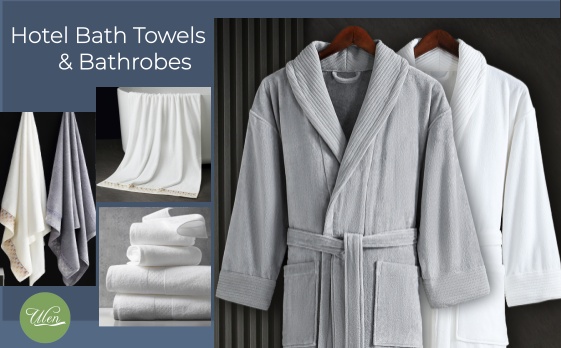
This Ulen guide is your definitive solution. We move beyond simplistic price comparisons to provide a strategic framework for procuring hotel-grade bath robes, towels, and mats that offer uncompromising quality at a truly good price. The secret lies not in finding the cheapest option, but in identifying the most cost-effective investment over time.
Part 1: Redefining “Good Price” for Hotel Bath Linens
A low purchase price can be deceptive. The true metric of a “good price” is Lowest Cost-Per-Use.
-
The Formula: Total Cost ÷ Total Usable Laundry Cycles = Price Per Use
-
The Reality Check: A $10 bath towel that pills, fades, and becomes rough after 50 cycles costs $0.20 per use. A $25 towel that remains soft, absorbent, and vibrant for 200 cycles costs $0.125 per use. The “cheaper” towel is, in reality, 60% more expensive per guest.
True value combines initial cost with longevity, performance, and operational savings.
Part 2: The Quality Decoder: Key Specifications for Towels, Robes & Mats
Understand these metrics to compare apples to apples and avoid overpaying for marketing hype.
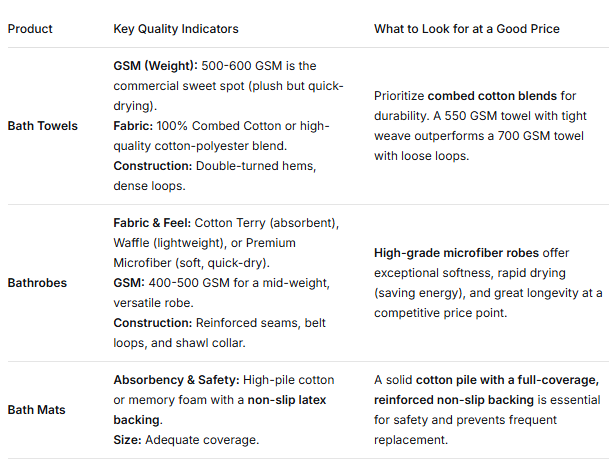
The Universal Non-Negotiable: OEKO-TEX Standard 100 Certification. This independent test verifies fabrics are free from harmful substances—a must for guest safety and your liability.
Part 3: The 5-Step Procurement Strategy to Secure Value
Follow this actionable process to make confident purchasing decisions.
-
Audit & Standardize: Consolidate needs across your property (rooms, spa, pool). Reducing SKUs (e.g., one type of towel for all rooms) increases bulk buying power and simplifies inventory.
-
Source Strategically: Engage with vertically integrated manufacturers or specialized hospitality suppliers. They often provide better pricing, consistent quality, and expertise that generic wholesalers lack.
-
Demand & Test Samples: Never buy without a laundered sample.
-
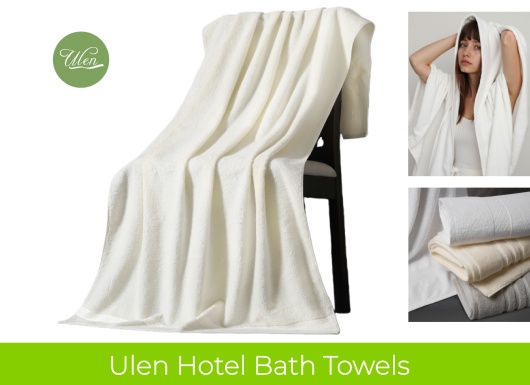
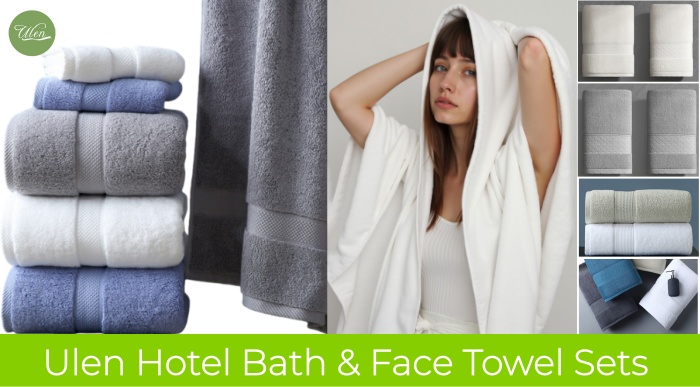
The Towel Test: Wash and dry it 5-10 times. Does absorbency decline? Does it pill or shed lint excessively?
-
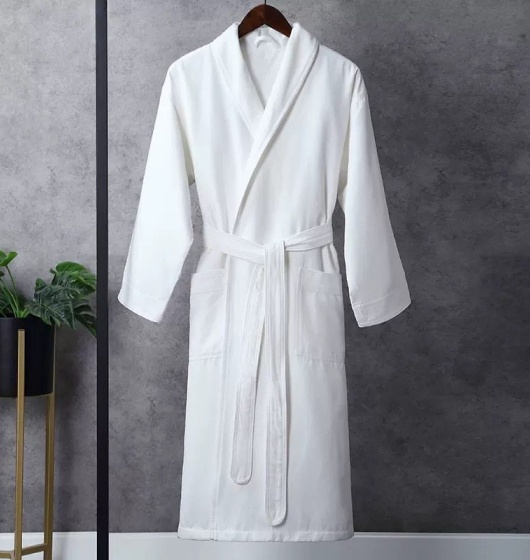
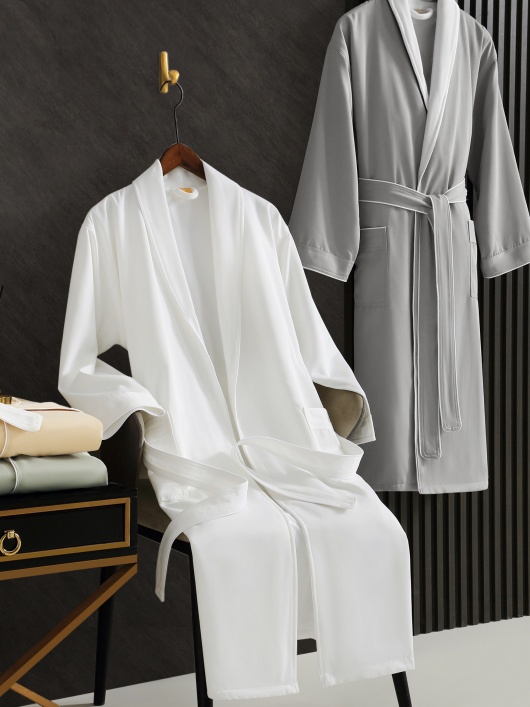
The Robe Test: Check for seam integrity and colorfastness after washing. Does the fabric maintain its softness?
-
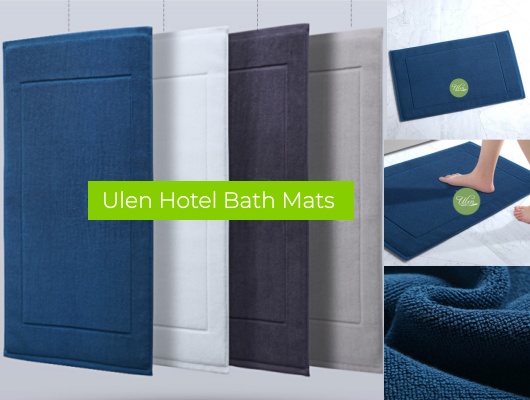
The Bath Mat Test: Verify the non-slip backing remains firmly adhered after multiple washes.
-
-
Calculate the True Cost: Ask suppliers for estimated lifespan in commercial cycles. Use the Cost-Per-Use formula to compare options objectively. Factor in operational savings from quick-drying materials.
-
Negotiate the Complete Package: Once you’ve identified a quality product, negotiate on bulk pricing, bundled packages (e.g., towel + robe sets), and door-to-door shipping terms to maximize your overall value.
Part 4: Smart Splurges vs. Strategic Saves
-
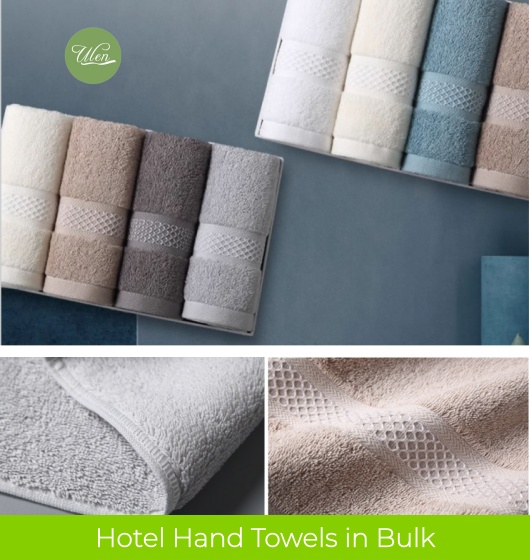
SPLURGE on: Bath Towel Weight (GSM) and Bath Mat Safety Backing. These are high-impact items for guest comfort and safety. Invest in quality here.
-
SAVE on: Decorative Details. Simple, embroidered logos vs. woven jacquard labels. Opt for standard sizes over custom dimensions.
Conclusion: Building a Bath Linen Program That Pays Off
Finding quality at a good price is a deliberate process of prioritization, education, and testing. By focusing on commercial-grade specifications, total cost of ownership, and rigorous sample testing, you transform your bath linen procurement from a recurring expense into a smart investment that enhances your guest experience and protects your profits for years to come.
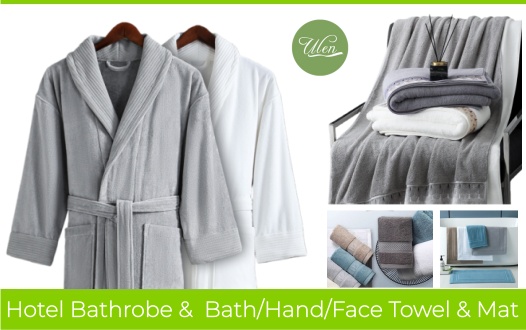
Ready to Source Smarter?
Ulen provides OEKO-TEX certified, commercial-grade bath linens engineered for the perfect balance of luxury and longevity. Our direct manufacturing allows us to offer transparent pricing and products built to excel in the Cost-Per-Use equation.
Quality Hotel Bath Linens at a Good Price: FAQs on Towels, Robes & Mats Procurement
1. What does “good price” really mean for hotel bath linens?
A good price is not the lowest upfront cost. It means the lowest Cost-Per-Use (CPU) – total cost divided by total usable laundry cycles. A $25 towel lasting 200 cycles ($0.125/use) is a better price than a $10 towel lasting 50 cycles ($0.20/use).
2. How do I calculate Cost-Per-Use for towels, robes, and mats?
Use the formula: CPU = (Purchase price) ÷ (Expected wash cycles). For more accuracy, add laundry costs (water, energy, labor, detergent) per cycle. Compare CPU across products to find true value.
3. What is the most important certification for hotel bath linens?
OEKO-TEX Standard 100 is non-negotiable. It independently verifies fabrics are free from harmful substances, ensuring guest safety and reducing your liability. Never buy bath linens without this certification.
4. What GSM should I look for in quality bath towels?
For a balance of luxury and durability, choose 500–600 GSM. Towels below 450 GSM feel thin; above 700 GSM dry too slowly. A 550 GSM towel made of long-staple cotton or quality blend offers excellent absorbency and lifespan.
5. How can I get quality bath linens without overspending?
Use a strategic sourcing process: standardize SKUs across your property (one towel type for all rooms), partner with vertical manufacturers, demand laundered samples, calculate CPU, and negotiate bulk pricing and bundled packages.
6. Why is testing a laundered sample so important before bulk buying?
Unwashed samples feel soft due to finishing chemicals. After 5–10 commercial washes, you see true performance: shrinkage, pilling, seam integrity, backing adhesion (mats), and softness retention. Testing prevents costly mistakes.
7. What should I test on a bath towel sample?
Wash and dry it 5–10 times. Check: absorbency decline (does it still dry well?), pilling or linting, shrinkage (aim <5%), colorfastness (no fading or bleeding), and hem integrity (no fraying).
8. What should I test on a bathrobe sample?
After washing, inspect seam strength (shoulders, armholes, belt loops), fabric softness retention, colorfastness, and shrinkage. Quality robes maintain their shape and feel through hundreds of cycles.
9. How do I test a non-slip bath mat sample?
The backing is critical. After 5–10 washes, check if the non-slip backing remains firmly adhered, does not crack or peel, and still grips. Also test for shrinkage and colorfastness. A failing backing is a safety hazard.
10. Where should I splurge vs. save on bath linens?
Splurge on high-GSM towels (500–600) and bath mat safety backing – these directly impact guest comfort and safety. Save on decorative details (simple embroidered logos vs. jacquard) and standard sizes instead of custom dimensions.
11. How does standardization help me get better pricing?
Using the same towel, robe, and mat across all rooms reduces SKUs. A single, large-volume order gives you bulk buying power – suppliers offer lower per-unit pricing, and you simplify inventory management and laundry sorting.
12. What is a vertical manufacturer, and why should I work with one?
A vertical manufacturer controls production from yarn to finished product, eliminating middleman markups. They offer transparent pricing, consistent quality, and flexibility on MOQs and customizations – often at better value than trading companies.
13. How do I negotiate the best total package with a supplier?
Once you’ve identified a quality product, negotiate on: bulk pricing tiers, bundled packages (e.g., towel + robe sets), door-to-door shipping terms (included vs. extra), payment terms, and replacement guarantees for defects.
14. Can I use the same towels for guest rooms and the pool to save money?
It’s not recommended. Pool towels face chlorine, sand, and higher turnover. Use quick-dry, lower-GSM towels for pool/spa and plush, higher-GSM for guest rooms. Matching the product to the environment extends lifespan and saves money long-term.
15. What is the single most important metric for buying quality bath linens at a good price?
Cost-Per-Use (CPU) is the most important metric. It integrates purchase price, lifespan, and operational costs into one number. A lower CPU always means better long-term value, even if the upfront price is higher. Always calculate CPU before buying.