
Procuring hotel bedding sets is a high-stakes balancing act. Buyers must navigate between the Scylla of low-quality (which leads to guest complaints and frequent replacement) and the Charybdis of overpriced luxury (which strains operational budgets). The sweet spot—high-quality bedding at a good price—is not a myth, but it requires a strategic, informed approach.
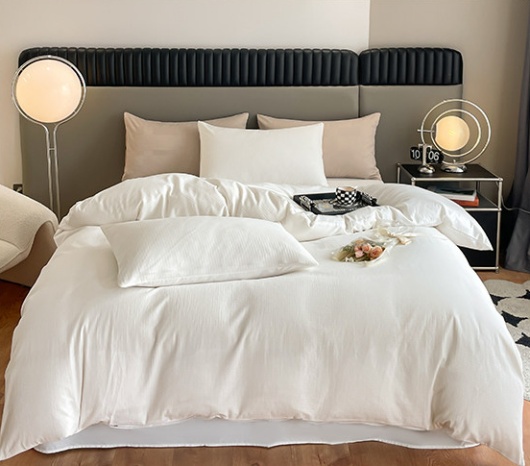
This guide cuts through the marketing noise. We provide a step-by-step framework to help hoteliers, procurement managers, and property owners source bedding sets that deliver durable comfort for guests and compelling value for the balance sheet.
Step 1: Define “Quality” and “Good Price” for Your Property
Quality and value are relative on hotel bedding sets. Start by aligning your purchase with your specific needs.
-
Segment Your Requirements: A 200-room beach resort’s needs differ from a 30-room boutique hotel. Define your guest profile, laundry cycle frequency, and brand positioning.
-
Calculate Total Cost of Ownership (TCO): A “good price” isn’t the lowest unit cost. It’s the price that delivers the lowest cost per use over time. Factor in expected lifespan (wash cycles), replacement costs, and guest satisfaction impact.
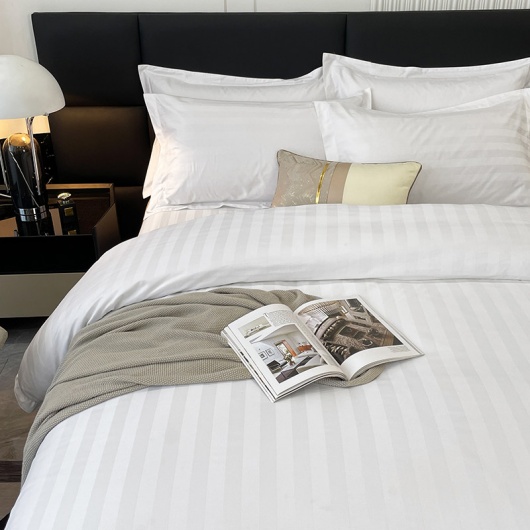
Step 2: Decode the Specifications – What Actually Matters for Value?
Look beyond buzzwords like “luxury feel.” Focus on these measurable indicators of hotel linen fabric quality that affect both performance and price.
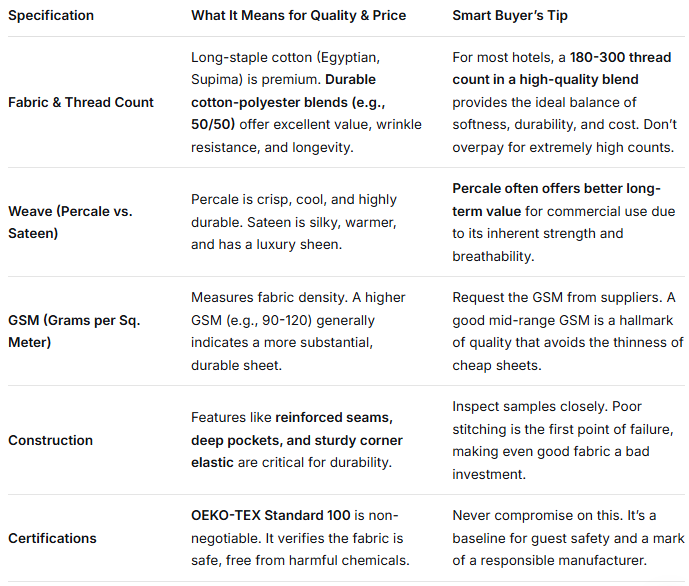
Step 3: The Strategic Path to a “Good Price”
Quality at a good price is achieved through smart buying, not just haggling.
-
Prioritize Value-Engineered Fabrics: As noted, premium polyester-cotton blends are the workhorses of the industry. They drastically reduce ironing needs, dry faster (saving energy), and often outlast pure cotton linen fabric in commercial laundry, offering superior TCO.
-
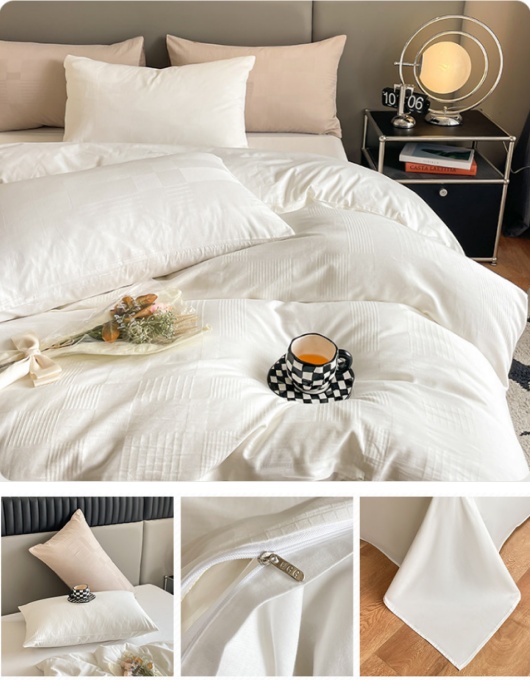
Order in Bulk and Standardize: Consolidate orders for all room types. Purchasing complete bedding sets (flat sheet, fitted sheet, pillowcases) as a single SKU from one supplier maximizes volume discounts and simplifies logistics.
-
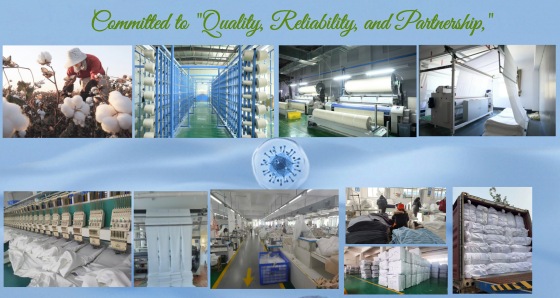
Partner with a Vertical Manufacturer: Suppliers who control the manufacturing process from yarn to finished product (vertically integrated) eliminate middleman markups. Ulen hotel linen supplier can offer transparent, competitive pricing and greater flexibility for custom needs.
-
Request & Test Physical Samples: This is the most crucial step. Feel the fabric, check the stitching, and crucially, wash the sample 3-5 times. Does it soften nicely or pill? Does the color fade? A true test reveals the real-world value.
-
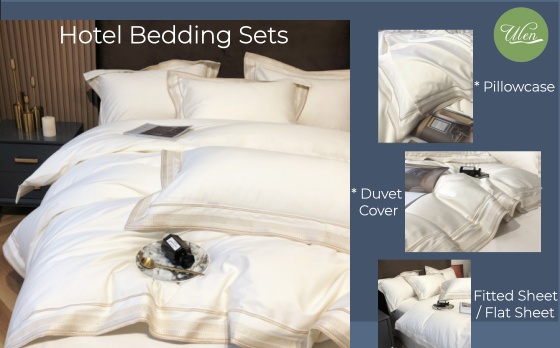
Analyze the Complete Quote: Scrutinize what’s included for the hotel bed linens. Is it FOB (Free on Board) or landed cost? Clarify logistics, duties, and packaging costs to avoid hidden fees that inflate the “good price.”
Conclusion: The Intelligent Investment
Finding quality hotel bedding at a good price is a systematic process of demanding transparency, understanding specifications, and calculating long-term value. By shifting the focus from the cheapest option to the most cost-effective solution, you invest in bedding that protects your guests’ sleep and your property’s profitability for years to come.
Ready to Source Smarter?
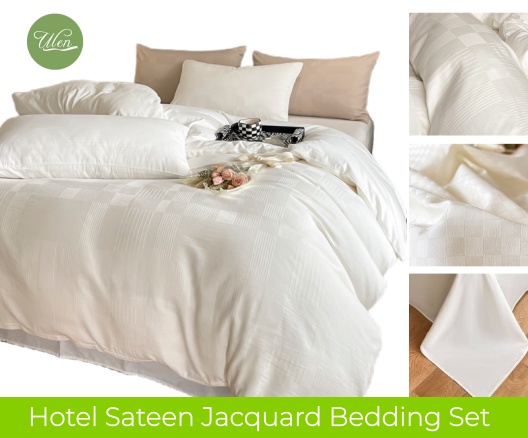
Ulen is a vertical hotel linen manufacturer dedicated to engineering commercial-grade bedding sets that define this balance. We provide the detailed specifications, OEKO-TEX certified fabrics, and pre-washed samples you need to verify quality and value firsthand—all at a transparent, competitive price point.
1. How do I balance quality and price when sourcing hotel bedding sets?
Start by defining your property’s specific needs based on guest profile, laundry frequency, and brand positioning. Then focus on total cost of ownership (TCO) rather than upfront unit price. A slightly higher initial investment in durable, commercial-grade bedding often delivers a lower cost-per-use than cheaper alternatives that require frequent replacement.
2. What is total cost of ownership (TCO) for hotel bedding, and why does it matter?
TCO factors in purchase price, expected wash cycles, replacement frequency, and operational costs (labor, energy, laundry). Calculating cost-per-use (price ÷ wash cycles) reveals true value. A $50 set lasting 250 cycles ($0.20/use) outperforms a $30 set lasting 100 cycles ($0.30/use), making the higher upfront investment more economical long-term.
3. What is the most cost-effective fabric for commercial hotel bedding?
Premium cotton-polyester blends (typically 55/45 or 60/40) offer the best value. Polyester adds wrinkle resistance, quick drying, and 300+ wash cycle durability, while cotton ensures breathability and softness. These blends drastically reduce ironing labor, save energy, and often outlast pure cotton in commercial laundry environments.
4. How can I get the best price on hotel bedding without sacrificing quality?
Order in bulk and standardize across all room types. Consolidate complete bedding sets (flat sheet, fitted sheet, pillowcases) as a single SKU to maximize volume discounts. Partner with a vertical manufacturer who controls production from yarn to finished product, eliminating middleman markups and offering transparent, competitive pricing.
5. What thread count offers the best value for hotel sheets?
The sweet spot is 180–300 thread count (TC) . This range provides excellent durability, breathability, and comfort without the inflated pricing and misleading construction of ultra-high TC sheets (800–1000+). Focus on fiber quality and weave rather than chasing exaggerated numbers.
6. Are cotton-polyester blends more cost-effective than 100% cotton for hotels?
Yes, for most hotel applications. Cotton-polyester blends offer lower cost-per-use due to extended lifespan (300+ cycles), reduced ironing labor, faster drying times, and superior wrinkle resistance. While 100% cotton provides unmatched natural softness, it requires more maintenance and shorter replacement cycles, increasing operational costs.
7. How do I test bedding samples to ensure I’m getting good value?
Always request samples and perform a wash test (3–5 industrial cycles) . Evaluate:
-
Softness progression: Does it become softer or harsher?
-
Pilling resistance: Do fabric balls form?
-
Shrinkage: Aim for under 5–8%
-
Colorfastness: Does the color fade or bleed?
-
Seam integrity: Do reinforced corners hold up?
This testing prevents costly mistakes and verifies real-world performance.
8. What should I look for in a supplier’s quote to avoid hidden costs?
Scrutinize whether pricing is FOB (Free on Board) or landed cost (including freight, duties, insurance, and delivery). Clarify packaging costs, payment terms, and any minimum order quantity (MOQ) requirements. A transparent quote includes all logistics and handling fees so you can accurately compare total procurement costs.
9. How do I calculate the true cost-per-use for hotel bedding?
Use the formula: Cost-Per-Use = Total Cost of Bedding Set ÷ Estimated Lifespan in Wash Cycles.
Request suppliers to provide expected wash cycle data based on third-party testing. This calculation reveals which option delivers genuine long-term value, even if the upfront price appears higher.
10. What certifications should I require to ensure quality and safety?
Demand OEKO-TEX Standard 100 certification for all fabrics—this guarantees textiles are free from harmful substances. For cotton products, look for Egyptian Cotton, or GOTS certifications. Request third-party test reports for tensile strength, colorfastness, and pilling resistance to validate durability claims.
11. How does working with a vertical manufacturer improve pricing?
A vertical manufacturer controls the entire production chain—from yarn sourcing to weaving, finishing, and sewing. This integration eliminates intermediary markups, allows for transparent cost structures, and provides greater flexibility for custom requirements. You pay for the product, not layers of distribution.
12. What construction features indicate quality without unnecessary cost?
Look for reinforced stitching at corner seams (bar-tacking or double-stitching), deep pockets (15+ inches) for fitted sheets, full elastic hems, and robust closures on duvet covers (quality zippers or button systems). These features ensure durability without paying for cosmetic embellishments that don’t impact longevity.
13. How can I standardize bedding across my property to reduce costs?
Consolidate orders by selecting consistent sizes, colors, and specifications for all room types. Purchase complete bedding sets (flat sheet, fitted sheet, pillowcases) as a single SKU from one supplier. Standardization maximizes volume discounts, simplifies inventory management, reduces par levels, and streamlines laundry operations.
14. What are the common mistakes that lead to overpaying for hotel bedding?
Common pitfalls include:
-
Chasing excessively high thread counts that inflate price without adding durability
-
Focusing only on unit price rather than cost-per-use
-
Ordering without washed samples, leading to surprises after the first laundry cycle
-
Over-specifying 100% cotton for all applications where blends would perform better
-
Failing to negotiate bulk discounts across complete bedding sets
15. How do I verify that a supplier’s “good price” reflects genuine quality?
Request:
-
Physical samples for pre- and post-wash testing
-
Third-party laboratory test reports for shrinkage, colorfastness, and tensile strength
-
OEKO-TEX and ISO certifications
-
References from comparable hotels
-
Transparent cost breakdowns showing materials, labor, and logistics
Suppliers who provide these willingly demonstrate confidence in their product’s quality and value proposition.