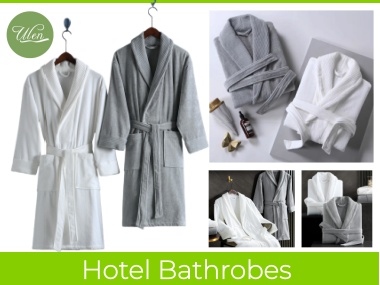
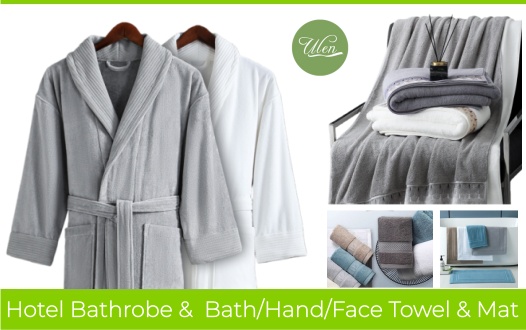
Purchasing hotel bathrobes based on price alone is a costly mistake. For procurement managers and hotel operators, the invoice price is less than half of the story. The real expense is hidden in laundry rooms and replacement closets. To unlock true value and optimize your budget, you must calculate the True Cost-Per-Use (CPU).
This guide provides a clear, actionable formula to transform how you evaluate hotel bath linens, like bathrobe investments, ensuring you pay for long-term value, not just short-term savings.
The Procurement Blind Spot: Why Unit Price Lies
A $30 robe and a $70 robe appear to have a clear winner on a purchase order. But consider this:
-
The $30 robe may pill, shrink, and become threadbare after 40 commercial washes.
-
The $70 robe, with superior fabric and construction, may last 150 washes while maintaining its luxury feel.
Without calculating CPU, you risk choosing the option that costs more per guest use and generates more guest complaints. CPU is the definitive metric for total cost of ownership (TCO) on hotel bath robes.
The Cost-Per-Use Formula Explained
The CPU formula is straightforward but powerful:
Cost-Per-Use (CPU) = (Purchase Cost + Total Laundry Cost) / Total Number of Uses
Let’s break down each variable with a procurement lens:
1. Purchase Cost:
The net price per hotel robe delivered to your property, including any tariffs or logistics fees.
2. Total Laundry Cost (The Silent Budget Killer):
This is the cumulative cost of cleaning the robe over its lifetime.
Total Laundry Cost = Number of Washes × Cost Per Wash
Number of Washes: The robe’s realistic lifespan in your commercial laundry. This is not the supplier’s claim, but a number you must validate through testing (e.g., 50, 100, 150 cycles).
Cost Per Wash/Kg: Your all-in cost to process one kilogram of hotel bath linens. This includes water, energy (gas/electricity), detergent/softener, labor, and machine depreciation. Consult your laundry manager or contract provider for this crucial figure. Industry averages range from $0.20 to $0.40 per pound.
3. Total Number of Uses:
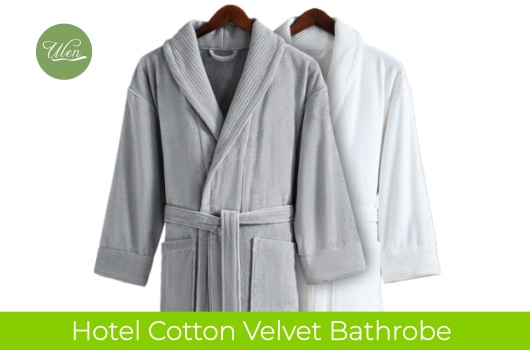
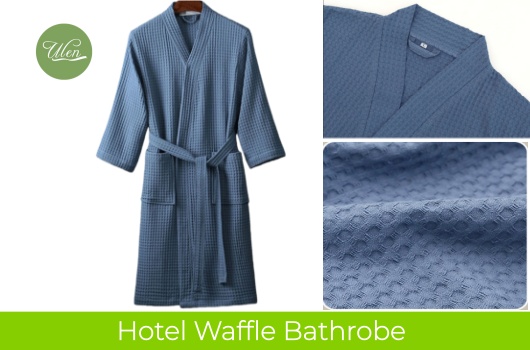
In most hotels, this equals the Number of Washes, taking hotel waffle bath robes for an example, they are laundered after each guest use. Adjust if your policy differs (e.g., spa robes used multiple times between washes).
Real-World CPU Analysis: A Tale of Two Robes
Let’s compare a budget option versus an investment-grade robe with real numbers.
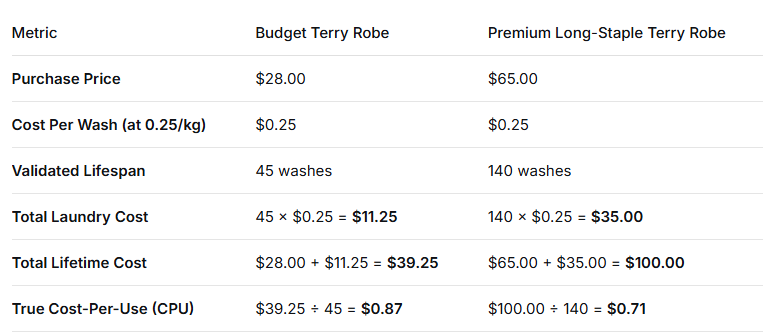
The Procurement Insight: The premium robe, despite a 132% higher purchase price, has an 18% lower Cost-Per-Use. It saves money over time and offers a consistently better guest experience.
Critical Factors That Make or Break Your CPU
-
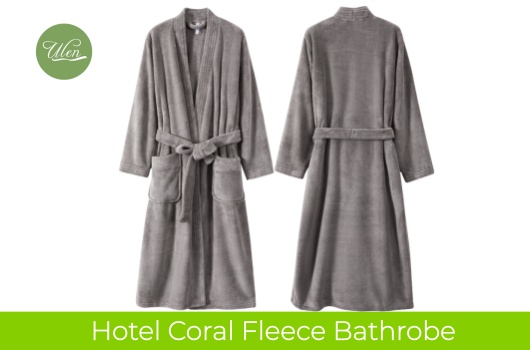
Fabric & Construction: Dense, long-staple cotton terry lasts longer than thin, short-staple or blended fabric. Reinforced seams and high-quality belt loops prevent early failure.
-
Laundry Chemistry & Temperature: Excessive bleach and high heat are the top causes of premature fabric degradation. Align with your laundry on a gentle yet effective cycle for robes.
-
Theft & Loss Rates: A CPU model assumes you can use the cotton bath robe for its full lifespan. Factor in your property’s typical loss rate (e.g., 5-10%) for a complete financial picture.
-
Storage & Handling: How robes are stored (folded vs. on hangers) and handled between uses affects wear before they even reach the laundry.
Introducing: The Free Hotel Bathrobe CPU Calculator
We’ve built a professional tool to eliminate guesswork.
For an example, our Free Hotel Bathrobe Cost-Per-Use Calculator to:
-
Input Multiple Quotes: Compare 3-4 supplier options side-by-side in real-time.
-
Model Scenarios: Adjust laundry cost, lifespan, and loss rates to see their financial impact instantly.
-
Generate Visual Charts: Create clear charts for presentations to finance or ownership.
-
Make Data-Driven Decisions: Instantly identify the proposal with the lowest long-term cost on hotel bath linens.
Your 4-Step Action Plan for Next Procurement
-
Demand Test Samples & Data: Before any RFP, require physical samples and the supplier’s own wash test reports. Then, run your own 25-cycle mini-test in your laundry.
-
Gather Operational Data: Partner with your laundry manager to get a precise cost per kg/pound. Track a batch of current bath robes for hospitality to establish a baseline lifespan.
-
Crunch the Numbers: Use the free calculator to input data from shortlisted suppliers. Let the CPU decide, not the unit price.
-
Negotiate with Power: Present the CPU analysis to suppliers. Challenge the premium supplier: “Can you improve the lifespan to lower the CPU further?” Challenge the budget supplier: “How can you address the durability issues that lead to this higher CPU?”
Conclusion: From Expense Item to Strategic Asset
A hotel bathrobe is not just an amenity; it’s a recurring line item on your P&L. By adopting the Cost-Per-Use model, you shift the procurement conversation from upfront price to long-term value and performance.
This methodology empowers you to invest in quality that pays for itself, reduce annual replacement budgets, and enhance the guest experience that justifies your room rates.
Start Today: Contact Ulen team today, asking for your bathrobe evaluation, and transform your procurement strategy from reactive buying to proactive financial management.
Hotel Bathrobe Procurement: 10 Essential FAQs on Cost-Per-Use
1. What is Cost-Per-Use (CPU) for hotel bathrobes, and why is it better than unit price?
Cost-Per-Use (CPU) measures the total cost of owning and using a bathrobe over its entire lifespan, rather than just the upfront purchase price. The formula is:
CPU = (Purchase Cost + Total Laundry Cost) ÷ Total Number of Uses
Unit price is misleading—a $30 robe that lasts 40 washes often costs more per guest use than a $70 robe that lasts 150 washes. CPU gives you the true total cost of ownership (TCO) and helps avoid costly procurement mistakes.
2. How do I calculate the Cost-Per-Use for a hotel bathrobe?
Use this three-step formula:
Purchase Cost: The net price per robe delivered to your property, including logistics.
Total Laundry Cost: (Number of washes × cost per wash/kg). Multiply the robe’s expected lifespan by your facility’s all-in laundry cost per kilogram (water, energy, labor, chemicals, depreciation).
Total Uses: Typically equals the number of washes for hotel guest robes.
Example: A $70 robe lasting 150 washes with $0.30 per wash = CPU of $0.77; a $30 robe lasting 40 washes with the same laundry cost = CPU of $0.94. The premium robe is cheaper long-term.
3. What is a realistic lifespan for a commercial hotel bathrobe?
Lifespan varies by fabric quality, construction, and laundry conditions. In commercial hospitality settings:
Budget robes (short-staple cotton, thin terry): 40–60 washes
Mid-range robes (standard cotton, basic construction): 80–100 washes
Premium robes (long-staple combed cotton, reinforced seams): 120–150+ washes
Always validate supplier claims with your own wash testing or request third-party lab reports.
4. What factors most affect a bathrobe’s durability and CPU?
Four critical factors determine how long a robe lasts and its true cost:
Fabric & Construction: Long-staple combed cotton, dense terry loops, and reinforced seams (double-stitched hems, sturdy belt loops) significantly extend lifespan.
Laundry Chemistry & Temperature: Excessive bleach and high heat are the top causes of premature fabric breakdown. Optimize cycles for fabric preservation.
Theft & Loss Rates: Factor in your property’s typical loss rate (e.g., 5–10%) for accurate CPU calculations.
Storage & Handling: Proper folding or hanging reduces unnecessary wear between uses.
5. How do I get accurate laundry cost data for CPU calculations?
Partner with your laundry manager or contract provider to obtain:
Cost per kilogram/pound—an all-in figure covering water, energy, detergents, labor, and equipment depreciation.
Industry averages typically range from $0.20 to $0.40 per pound, but your actual cost may vary by region, utility rates, and equipment efficiency.
Use this number in the CPU formula—it’s often the hidden variable that makes premium robes more cost-effective.
6. What should I look for in a durable commercial bathrobe?
Use this inspection checklist:
Fabric: 100% combed cotton with long-staple fibers (Egyptian, Pima, Supima). Dense terry loops that feel substantial.
Construction: Double-stitched or reinforced hems. Sturdy, well-attached belt loops—a common failure point.
Weight: While not the only metric, heavier robes (400–600 GSM range) generally offer greater durability.
Certification: OEKO-TEX® Standard 100 ensures no harmful chemicals that could degrade fabric or affect guests.
7. How can I test bathrobe samples before committing to a bulk order?
Run a 25-cycle mini-test in your own laundry before placing a large order:
Request 3–5 sample robes from each shortlisted supplier.
Process them through your commercial laundry for 25 cycles using your standard chemicals and temperatures.
Evaluate: Pilling? Shrinkage? Fading? Seam integrity? Absorbency retention?
Extrapolate the results to estimate full lifespan.
This small investment prevents costly mistakes.
8. What questions should I ask bathrobe suppliers to evaluate durability?
Ask these five questions to uncover true long-term value:
“What is the fiber composition? Is it long-staple combed cotton?”
“What is the expected wash cycle lifespan under commercial laundry conditions?”
“Can you provide wash test data or third-party lab reports on durability?”
“Do you offer pre-laundered samples for testing?”
“What construction details (seams, hems, belt loops) are reinforced for commercial use?”
9. How does theft and loss rate impact bathrobe CPU?
The CPU formula assumes each robe reaches its full wash cycle lifespan. If your property experiences 5–10% annual loss (theft, damage, or guest removal), you must adjust your calculations.
Adjusted CPU = (Purchase Cost + Total Laundry Cost) ÷ (Total Uses × Retention Rate)
A higher loss rate makes the premium robe’s longer lifespan less impactful—so factor in your specific property’s loss patterns when comparing options.